

We know as well as anyone that every legislative session produces a lot of feelings. Feelings of frustration, hope, letdown, confusion, and occasionally a small moment of joy when all of Trevor Lee’s bills die.
But once the dust settles, the feelings can subside but the numbers never do. Because numbers tell you what actually happened.
So for all of our fellow data nerds, chart lovers, and people who enjoy staring at legislative spreadsheets like they’re baseball stats, this is for you. We’ve pulled together the numbers from the 2026 session and tried to interpret what they mean, the trends, and the outliers.
You can find the big themes, gossip, and breakdowns of specific bills over on the podcast and our last Substack. Today is just for the data.
More Bills, Fewer Results
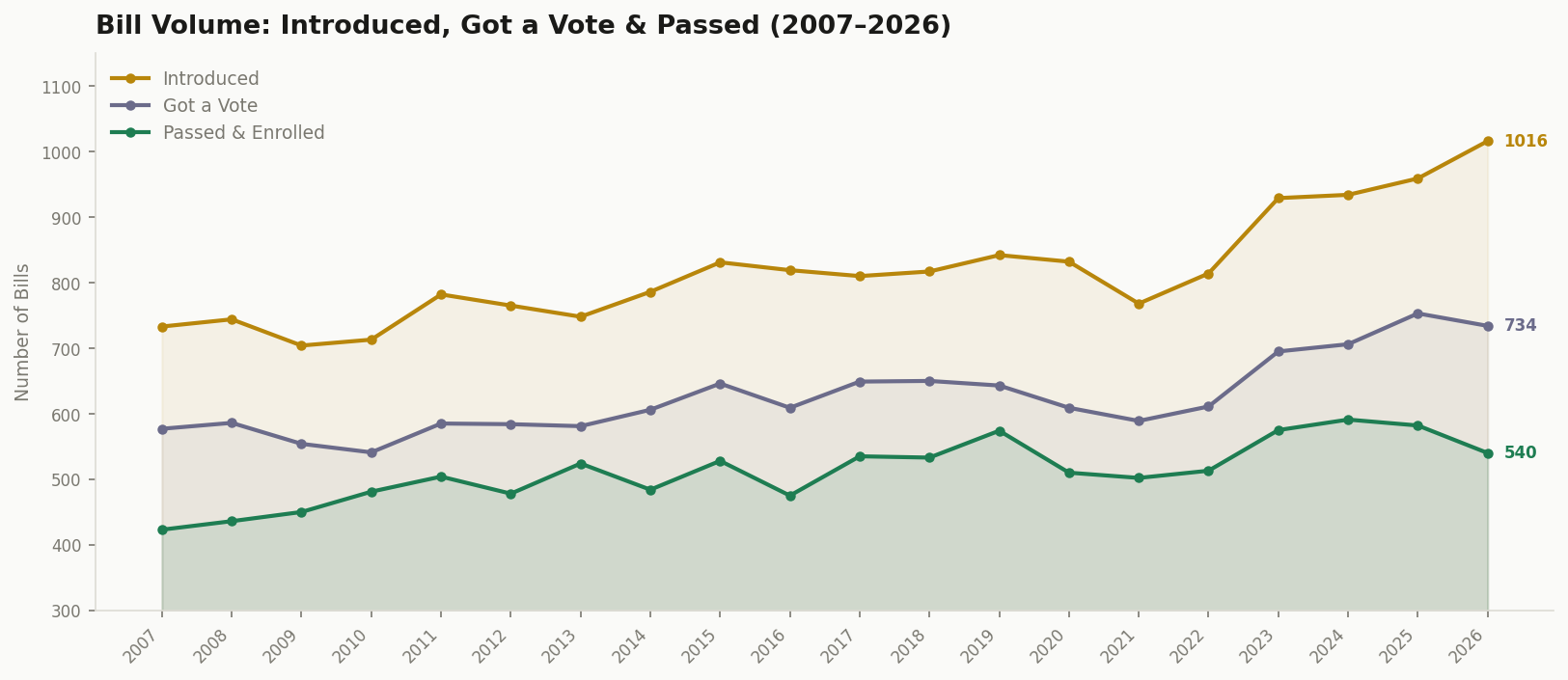
This year set a record for bill introductions. The legislature filed 1,016 bills, the highest number we’ve seen. But more bills doesn’t necessarily mean more productivity.
Out of those 1,016 bills:
734 received at least one vote somewhere in the process
540 ultimately passed
That’s still a huge volume of legislation, but interestingly, it’s not higher than the record passage numbers from the last two sessions.
So, legislators had a lot of ideas this year but they just didn’t turn as many of them into law.
There are a few possible explanations. Maybe the legislature spent more time fighting internally? Maybe leadership was more selective about what they allowed to move? Or maybe the girls were fighting? Or maybe introducing a lot of culture-war messaging bills that were never going anywhere clogged up the system?
Looking at you, Trevor Lee.
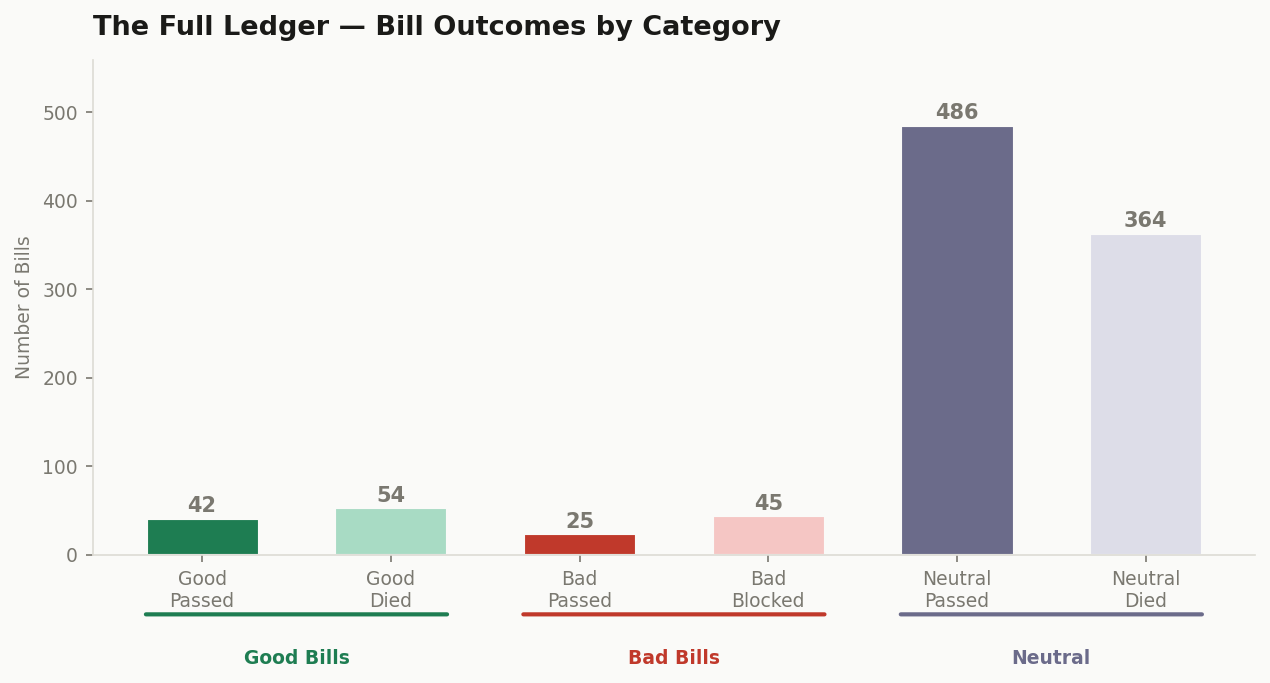
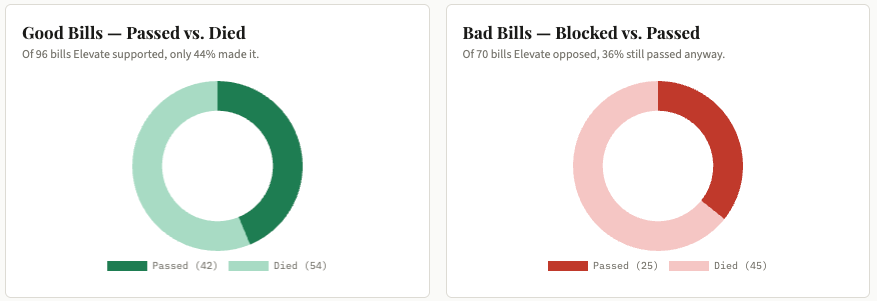
At Elevate we tracked 166 bills closely throughout the session.
Here’s how those categories performed:
Bills we supported: 44% pass rate
Bills we opposed: 36% pass rate
Bills we didn’t track or we’re neutral on: 57% pass rate
The neutral category had the highest success rate, which makes sense. A lot of the bills we don’t take a position on are the kind of technical or procedural legislation that quietly moves through the process, clean up code, were just fine pieces of legislation.
Still, the numbers are a good reminder that the legislature passes a lot of bills most people never hear about while the controversial ones soak up all the attention.
This is one of our paid subscriber posts. If you value the deep data analysis and charts, consider subscribing for free and if you like it, you can keep the $6/month subscription.
