

It’s been a brutal year. The second Trump administration has been exactly as bad as we feared (if not worse) and most days it feels like there’s nothing we can do to stop it. But Tuesday night felt different. For the first time in a long time, we’re feeling something that looks like hope.
Everyone’s got takes about what this means nationally. But we’re here to bring those lessons home to Utah. We want to celebrate these wins. We’ve earned that. But we also want to dig into what actually worked here, in our races, in our cities. Because these results don’t mean 2026 is in the bag. They mean that when we organize, when we show up, when we run on issues people actually care about, we can win. Even here.
What Actually Happened
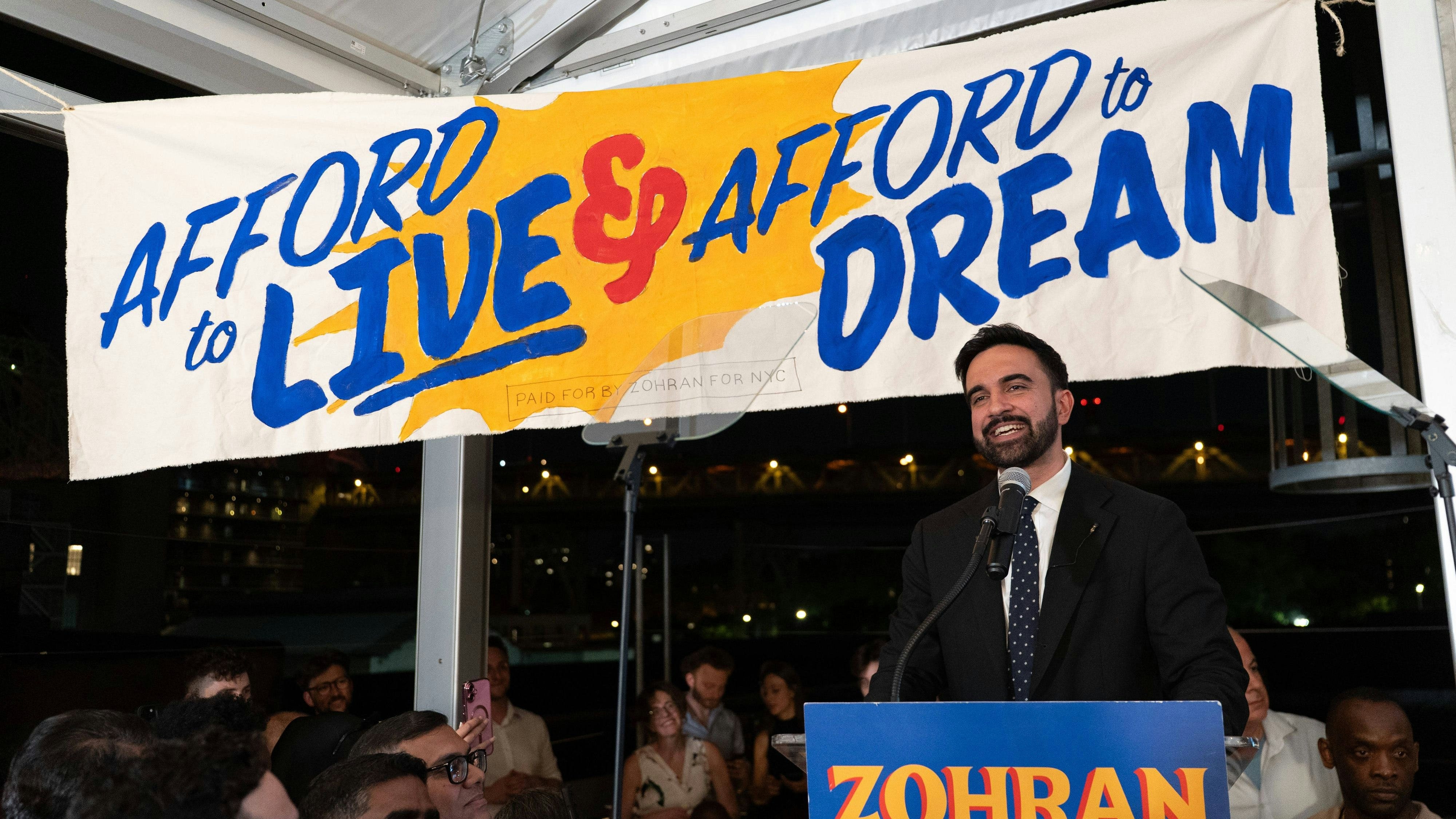
Okay, so obviously everyone’s talking about Zohran Mamdani winning New York City. And yeah, a 34-year-old democratic socialist immigrant becoming mayor of America’s largest city is a story. First Muslim mayor. Youngest mayor in over a century. Beat a former governor Trump endorsed. Generated the highest turnout since 1969. Big story.
But so much more happened on Tuesday across the country and right here in Utah.
Democrats are one seat short of a supermajority in Virginia’s House of Delegates where they picked up 13 seats. We broke the Republican supermajority in Mississippi. In Mississippi. We flipped statewide seats on Georgia’s Public Service Commission. Abigail Spanberger became Virginia’s first female governor. Mikie Sherrill won New Jersey. Mary Sheffield became Detroit’s first woman mayor.
And here in Utah, Democratic mayors won in major cities across the Wasatch Front. We had a Democratic sweep of city council seats in Ogden. Salt Lake City Council is now majority female for the first time since we expanded to seven seats, majority Latino, and still majority LGBTQ. Tish Buroker beat Dan McCay’s wife for Riverton mayor (maybe our favorite win of the night.)
But we aren’t here to just report results. We want to dig into the nitty gritty: how these elections were won, what voters are actually feeling, and how we take those lessons into 2026.
Lesson One: Economic Populism Isn’t Radical, It’s What People Actually Need
National: Zohran Mamdani just won New York City running on rent freezes, free buses, and universal childcare. Every single thing he talked about came back to cost of living. Exit polls across Virginia, New Jersey, California, and NYC all said the same thing: voters care about the economy and affordability, and they overwhelmingly sided with Democrats on the economy, a major shift from recent years.
Utah: On the exact same day Mamdani won, parents in Salt Lake County showed up at 10am on a Tuesday to a County Council meeting. They took time off work they probably couldn’t afford to lose. They made public comment to a room full of elected officials and we’re guessing most of them had never done that before. The press barely covered it. But they showed up anyway because it mattered. They were begging Republican council members not to close four affordable daycare centers.
That’s not two different stories from Mamdani’s win. That’s the same story. What Mamdani is promising in New York is what Utah parents are literally crying for.
And it’s not just childcare. Families across the state are trying to navigate where their next meal is coming from because they lost half their SNAP benefits when Trump’s government shutdown meant the USDA could only pay out partial food assistance in November. About 86,000 of the lowest-income households in Utah are facing food insecurity as Thanksgiving approaches. Utah Senate Democrats called on Republican leaders to use the state’s rainy-day fund to cover the rest. Republicans blamed congressional Democrats and gave some money to food banks instead.
Meanwhile, Republicans are causing healthcare premiums to rise. They’re making people’s economic lives demonstrably worse. Normal people in Utah are falling behind. And Trump’s approval rating is dropping because most voters say he’s not focused enough on improving the economy, the thing he campaigned on.
This is devastating for real families. But politically, Republicans are digging their own graves. They’re proving they don’t care about the economic issues voters actually care about. They’re handing us the message for 2026.
The lesson: When you center affordability and actually mean it, voters respond. It doesn’t matter if you’re a democratic socialist in Brooklyn or a mom in Kearns. Economic populism works because it’s not some ideological position, it’s people’s actual lives. And people are rightfully more concerned about their own lives and their kids’ lives before they’re concerned about anything else.
Democratic candidates have to center economic issues in a real way. Not just saying the words “affordability” or “cost of living.” Not talking about the economy at large. But talking about real people’s stories, understanding and highlighting economic struggles, and offering real, concrete, specific solutions to those problems.
And we hope to see the Republicans on the Salt Lake County Council held accountable next year. We hope to see opponents who center these issues and talk about how safe and affordable childcare benefits everyone.
Lesson Two: “Red Places” Are Only Red Until They’re Not
National: Democrats flipped 14 seats in the Virginia House of Delegates. We broke the Republican supermajority in Mississippi. We flipped statewide seats on Georgia’s Public Service Commission. These aren’t blue states having a good night. These are places people wrote off.
Utah: Monica Zoltanski held Sandy with 59% despite her opponent running a professional negative campaign tying her to Kamala Harris. Let’s be clear about what Sandy is: other than the mayor’s seat, it’s entirely represented by Republicans. It’s been the center of competitive campaigns for cycles. While Sandy often votes Democratic at the presidential level, it has Republican representatives in the House and Senate, and we’ve struggled to elect progressive representation at the local level.
Gay Lynn Bennion flipped the Cottonwood Heights mayoral seat by 13 points, a seat Republicans held for over 20 years, beating an incumbent Republican mayor. Paul Fotheringham won Holladay with 57%. Democratic candidates won three seats in Ogden, another city currently represented entirely by Republicans at the state, county, and mayoral levels.
These aren’t Salt Lake City. These are suburbs that have been reliably conservative. And they flipped or held because candidates talked about what actually matters to residents.
The lesson: This one is simple. It’s the thing we’ve always talked about. Stop writing off places as “too red.” If you organize and have a message that resonates, you can compete anywhere.
Lesson Three: The Moderate vs Progressive Debate Is a Stupid Debate
National: Here’s the narrative taking shape: Zohran Mamdani won because he’s a progressive, therefore progressives are the future. But wait. Virginia elected Abigail Spanberger, a moderate former CIA officer, as its first female governor. New Jersey elected Mikie Sherrill, a moderate former Navy pilot. Both won independents by double digits. Detroit elected progressive Mary Sheffield as its first woman mayor. Minneapolis saw all four DSA-endorsed progressive city council candidates win. And New York City elected a democratic socialist.
So which is it? Moderates or progressives?
It’s both. Stop asking the wrong question.
Utah: We can have a Nate Blouin and a Suzanne Harrison. We can have a Ben McAdams and a Salt Lake City Council that’s majority LGBTQ, majority Latino, and majority female. We’re not going to rehash the Evan McMullin versus Kael Weston debates here. It’s not productive and its not what voters care about.
This is about candidates who fit their districts. Who understand their communities. Who can speak authentically to the people they want to represent. Stop policing who can run for what based on what you personally think is “electable.”
The lesson: What Spanberger in Virginia and Mamdani in New York have in common isn’t where they fall on some imaginary ideological spectrum. It’s that they’re both candidates who fit their districts, and they ran campaigns relentlessly focused on making life more affordable for working people. Different solutions, same problem, same underlying message: the economy isn’t working for you, and I’m going to fight to change that.
We don’t have to pick. Both work when they’re authentic and centered on real issues. Stop telling people that Zohran is going to be the reason Democrats can’t win in other places. AOC has been in office since 2018 and we’re still electing moderate Democrats across the country despite the GOP’s attempts to tie us all together. Shut up. Go knock a door.
Lesson Four: Campaign Tactics: You Need a Villain, But You Can’t Invent One
This is where people are going to learn the wrong lesson, so let’s get ahead of it.
In Sandy, Cyndi Sharkey ran what we have to admit was an incredibly well-designed (game respect game) negative campaign against Monica Zoltanski, professionally done mailers tying Monica to Joe Biden and Kamala Harris, referring to her as “Democrat Monica Z,” and claiming she will turn Sandy into SLC.
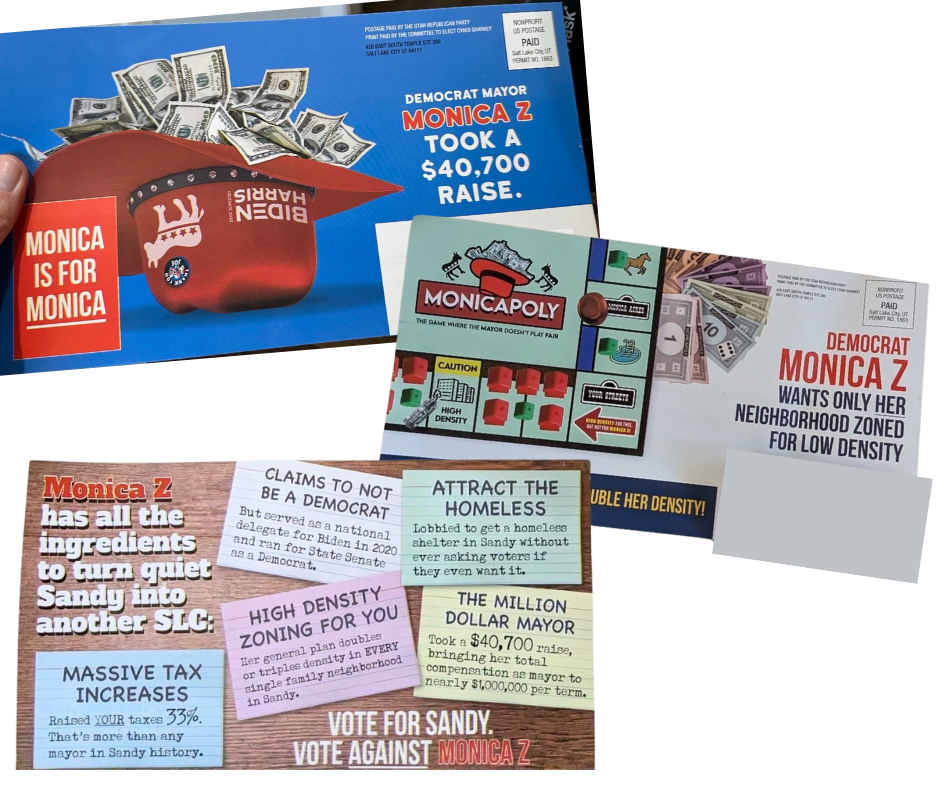
Monica won with 59%.
So the lesson is that negative campaigns don’t work, right?
Wrong.
Zohran Mamdani ran a relentlessly negative campaign against Andrew Cuomo. He called out Cuomo’s corruption, his scandals, his ties to real estate developers. But he didn’t make Cuomo the villain of his entire campaign. Cuomo was always a symptom of the bigger issue, a launch pad to contrast their visions for New York.
And it worked.
Here’s the difference: Mamdani was always running FOR something, not just against Cuomo. Every attack on Cuomo was tied back to his vision: rent freezes, free buses, grocery stores. The villain existed to illustrate why the hero’s vision mattered. “Cuomo represents a corrupt system that enriches developers while families can’t afford rent. I’m going to change that.”
More importantly: people already believed Cuomo was a villain. Mamdani didn’t have to invent that. Cuomo’s scandals, his nursing home deaths, his sexual harassment allegations, his resignation in disgrace, voters knew who he was. Mamdani just had to remind them and contrast it with an alternative.
In Sandy, the negative campaign tried to make Monica the villain. But people in Sandy know Monica. They’ve watched her govern. They trust her. You can’t invent a villain that voters don’t already believe exists. The attacks weren’t just ineffective, they probably backfired because they felt dishonest.
The lesson: You need a villain in politics. But the villain has to be real, someone or something people already see as standing in their way. It can be your opponent, it can be donors, it can be special interests, it can be corruption, sometimes it can be Trump. And even then, you can’t just run against them. You have to use the villain to illuminate what you’re fighting for. Mamdani wasn’t just anti-Cuomo. He was pro-affordable housing, pro-free transit, pro-childcare. The negative campaign worked because it was always in service of a positive vision.
Political messaging has to play into confirmation bias. If you try to tell voters that something is reality they don’t believe is real – like the economy is great but people don’t feel it in their bank account (cough cough Kamala Harris and Joe Biden) – they will not believe you. You need to lead people to where you want them to go, not shove them into it. And trust us, we have plenty of believable real villains in Utah and across the country.
Lesson Five: Doors > Everything Else
National: The New York Times called Mamdani a “TikTok Savant,” which is exactly the kind of condescending bullshit Mamdani called out in his victory speech. Social media, especially short video, certainly played an important role in Mamdani’s victory. But the reason so much of his content went viral was because of its focus on ordinary people. This point gets lost in a lot of the major media coverage, which is looking for any way it can downplay the profoundly important role of the public and of populism to Mamdani’s success.
All the production value in the world won’t make social media content viral if it lacks a compelling message. When Cuomo tried to copy the strategy with slick videos of himself jumping over cars, it became a laughingstock because of how scripted and empty it all was.
What actually won: 50,000 volunteers knocking 3 million doors. That’s the story. That’s what beat a former governor with name recognition and Trump’s endorsement.
Utah: We saw the same dynamic in Cottonwood Heights. And Salt Lake City. And Ogden. And West Jordan. Gay Lynn Bennion knocked doors. She did the work. She built relationships over years through Moms Demand Action, then running for state legislature, then running on local issues like the gondola and water conservation. Her opponent put up yard signs and billboards. His campaign finance reports show he barely campaigned.
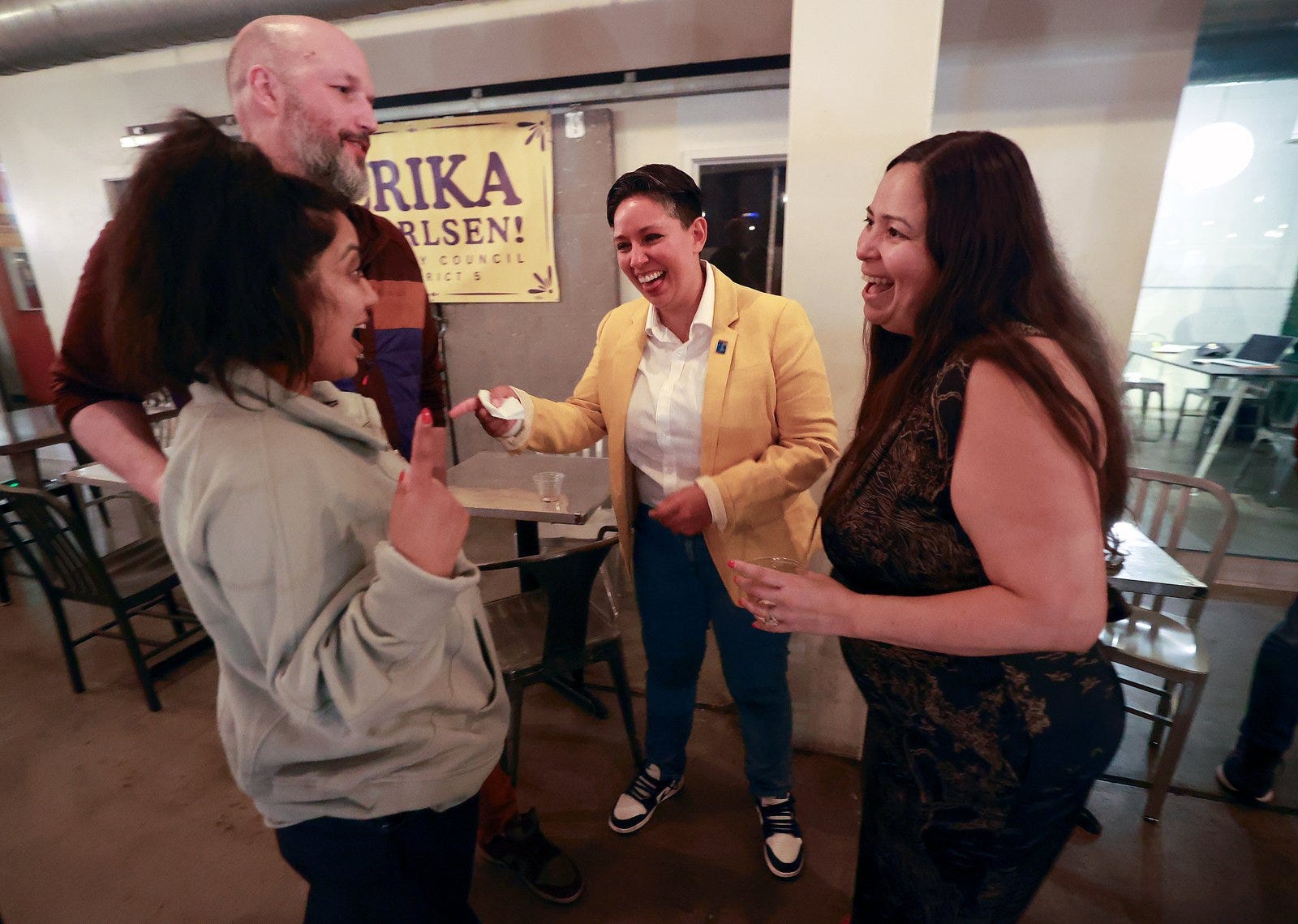
In Salt Lake City District 5, Erika Carlsen broke fundraising records and increased turnout through field organizing.
The lesson: Trust beats marketing. Organizing beats advertising. Showing up beats being slick. Every single time.
Lesson Six: Independent Voters Will Vote for Democrats. Full Stop.
National: Independents made up 33% of Virginia’s electorate, and Spanberger won them by 19 points. In New Jersey, they were 31% and went for Sherrill by 13 points.
Utah: Independents are our largest voting bloc. So let’s be very clear: stop panicking about independents. Stop trying to trick them into thinking you’re a moderate or whatever poll-tested garbage.
Treat people with respect. Speak to issues they care about because you actually care about them too. Don’t condescend. Don’t triangulate. Give them something real and they’ll vote for it.
The lesson: Independent voters aren’t some mysterious species. They’re just voters who are sick of partisan bullshit. They’ll vote for authenticity and solutions over insider politics.
What This Means Going Into 2026
Here’s what the data is telling us: Trump’s approval rating tracked almost exactly with Republican vote share across Virginia, New Jersey, California, and NYC. As he gets more unpopular (and he is getting more unpopular) our candidates keep winning bigger.
Polling is already shows Democrats leading in districts Trump won by 7, 8, even 9 points. If that holds, 2026 looks really, really good.
One Republican White House ally admitted: “People aren’t feeling the promises kept. You won on lowering costs, putting more money back into people’s pockets. And people don’t feel that right now.” Vivek Ramaswamy was even more direct: “We got our asses handed to us.”
These are good indicators. Really good indicators. Tuesday was proof that organizing works. That economic populism resonates in Mississippi and Georgia and even in Utah. That you can beat establishment politicians and dynasty families and professional negative campaigns if you do the work and build trust.
BUT we cannot get complacent. The Democratic brand is in shambles. Our approval hit a 30-year low in July. Yet, we’ve outperformed in three of the last four major elections (2022 midterms, 2023 off-year, and now 2025), but the pattern is clear: polls underestimate Democrats when Trump isn’t running. One good night doesn’t mean 2026 is guaranteed.
As Jamelle Bouie wrote, “a fundamental maxim of democracy: that there is no singular ‘people’ and there are no permanent majorities.” Every race must be fought hard, everywhere, every time.
So what does that mean practically? We have to swing for the fences. If there’s a district we lost by 10 points or less, it’s in play. We should act like it. We should compete everywhere. Tuesday gave us the roadmap and now we have to replicate what worked: the organizing, the economic messaging, the trust-building, the field programs.
Tuesday was the spark. The reassurance that our country isn’t in the absolute shitter forever. But sparks go out if you don’t tend them.
What Comes Next
Candidate recruitment for 2026 has already begun. Those Salt Lake County daycare centers still need defending. The organizing doesn’t stop. The door-knocking continues. The relationship-building goes on.
Because that’s what wins. Not magic. Not demographics. Not TikToks. Not inevitability.
Just people doing the work.
So yeah, this week we celebrate. We bask in what winning feels like. We let ourselves feel good about Zohran Mamdani and Abigail Spanberger breaking supermajorities in Mississippi and building progressive blocks of mayors in Utah.
Then we get back to work.
And after Tuesday, we believe we can.
GREAT read! Gives me a lot of hope but still so much work to be done, can’t stop now!
Shut up and go knock a door. 😂