

When Kevin O’Leary went on Fox News and accused local Utah organizations, including ours, of acting as Chinese Communist Party “cells,” it was easy to focus on the absurdity.
And to be clear – and we cannot emphasize this enough – it was absurd. But it was also useful.
Not because Kevin had a point, because he absolutely did not. But his accusation showed exactly how powerful people respond when normal questions start getting just a little too close to home.
The powerful politicians and billionaires don’t answer the questions; they attack the people asking them. Kevin didn’t explain the water, the power, the impacts on the Great Salt Lake, the tax breaks, or why local residents were kept in the dark until the Stratos Project was already moving. Instead, he tried to turn public scrutiny into a foreign conspiracy.
So naturally, instead of backing off after threats and doxxing, we locked in. Partly because if a billionaire wants to lie about us on national television, the least we can do is sell a hat about it.
But also because when someone tries that hard to make the story about something as far away as China, it is worth asking what they do not want people looking at here in Utah. So we started looking.
And the records obtained exclusively by Elevate Utah do not point to China.
What we found is something considerably more familiar in Utah politics: a process so weak, opaque, and legally manipulated that the public can be told nearly nothing (and only at the “11th hour”) and still be expected to thank their elected officials for their “transparency.”
Before Stratos was a controversy, before residents could object, before the process became public in any meaningful way, several of Utah’s most powerful insiders appear to have already been positioned around it. And by that we mean, not politically. Not coincidentally. Already holding the land. Already writing the laws.
One of them was the Speaker of the Utah House of Representatives.
Much A Deed About Nothing
So when you can’t sleep, naturally, you start digging through public records. That’s normal, right? Everyone does that? Cool. Anyway.
With the help of a classic Utah backcountry skier and public lands enthusiast, we were looking at land ownership around the proposed 40,000-acre Stratos data center project in Box Elder County.
And that is when we saw it. A very neat little square of land, sitting about three miles from the northernmost boundary of the proposed Stratos Project corridor, near the I-84 interchange at Hansel Valley Road.
The owner is listed under a company name: Mike Schultz Inc.
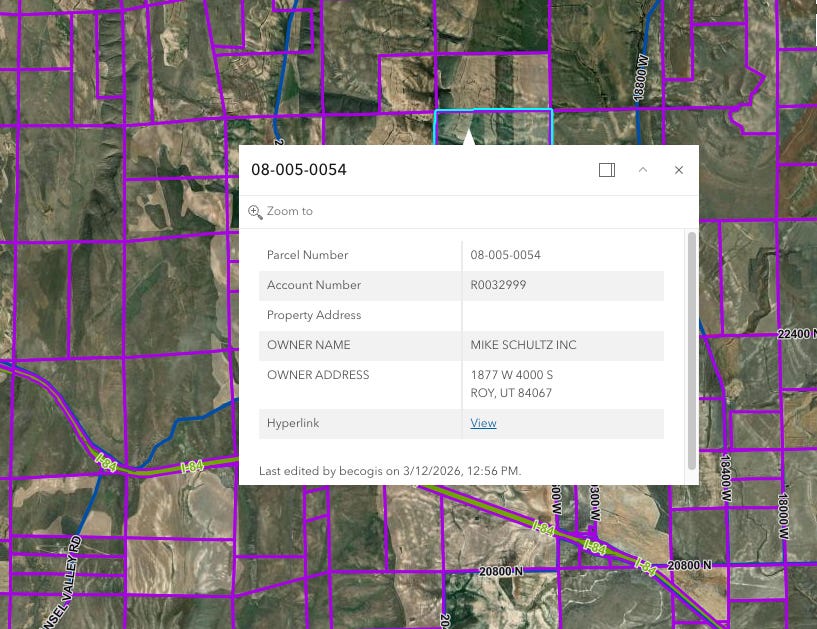
Now, despite the very subtle name, Mike Schultz Inc. is in fact owned by Mike Schultz, Speaker of the Utah House of Representatives.
So we did what any normal, well-adjusted person would do after seeing the Speaker’s company listed on land near the largest proposed development in the state. We pulled the deed.
As someone who does not own a house and, based on current housing prices, may have to continue to settle for recreational Zillow scrolling, we were delighted to learn that deeds are also public records, purchasable from the Box Elder County Recorder for the low, low price of $1.50.
This deed was filed in the Box Elder County Recorder’s Office on January 3, 2025. It shows the Lyle Holdaway Family Trust transferring two parcels in western Box Elder County to Mike Schultz Inc. The parcels total roughly 640 acres.
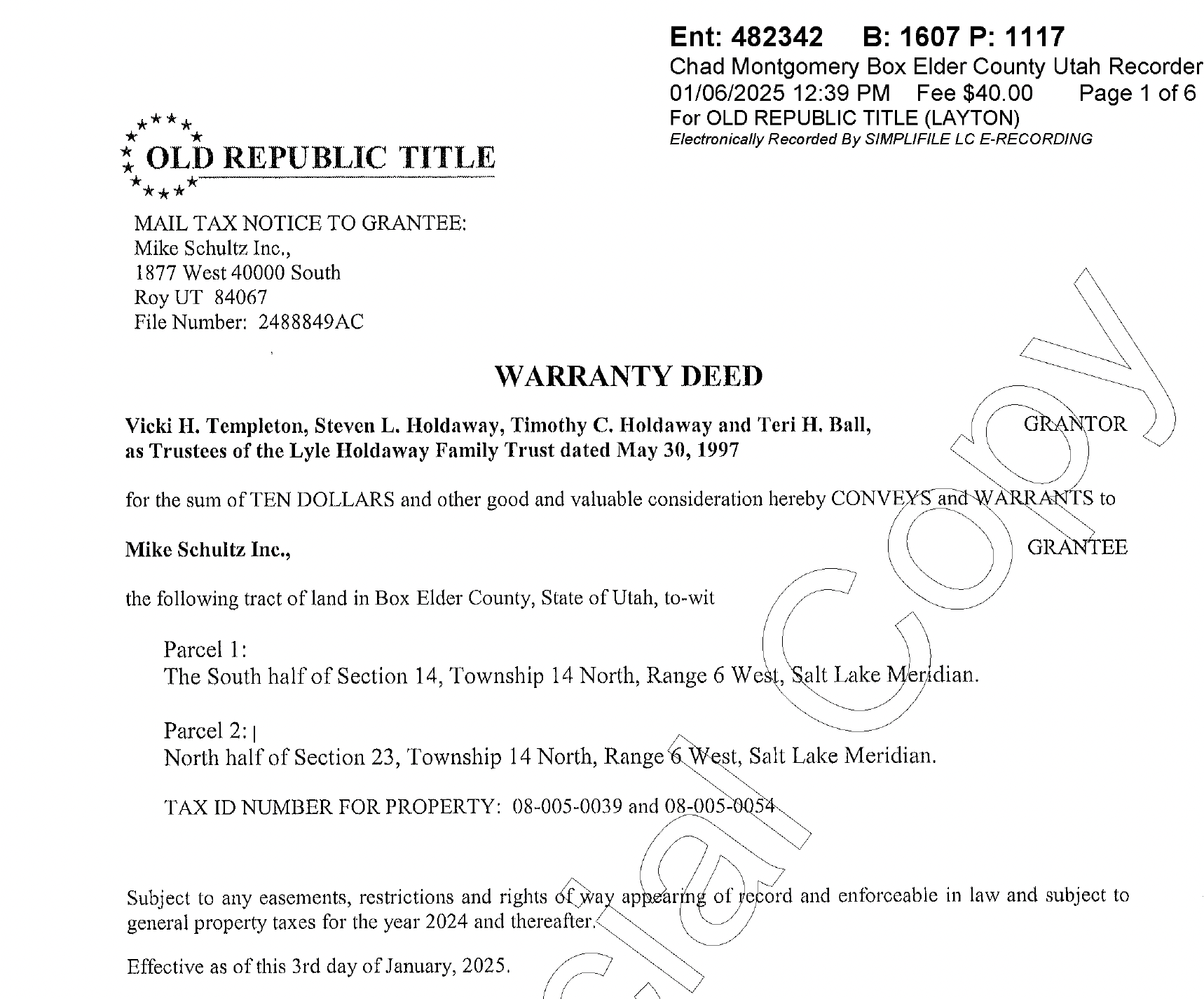
And the recorded consideration on the deed?
Ten dollars.
Ten.
Yeah.
But let’s be precise here, because we think precision matters when powerful men are calling you a foreign agent on national television.
The TEN DOLLARS does not necessarily mean Schultz bought 640 acres for ten dollars. In Utah, deeds are required to state some form of consideration to be legally valid, but the actual purchase price does not have to appear in the public record. A nominal figure, commonly “$10 and other good and valuable consideration,” (like this deed states) satisfies that requirement while keeping the real terms of the transaction private.
So we are not saying the Speaker bought 640 acres for less than most millennial Utahns now pay to apply for an apartment they will never get. We are saying his company received the land, and the public record does not tell us what, if anything, he paid for it.
And he purchased this land approximately 13 months before Box Elder County Commissioners even said they were hearing “rumors” of the data center deals with landowners.
Schultz told the Deseret News this week that he was “not made aware of” the Stratos Project “until just a little over 30 days ago.”
Kevin O’Leary, for his part, told Fox and Friends on April 27 that he had met with Governor Cox, Speaker Schultz, and Senate President Stuart Adams in late 2025 about the project. Schultz told the Deseret News that “Yeah, I wasn’t a part of that” and that O’Leary had reached out, but his schedule was too busy.
We are not in a position to resolve that particular disagreement. We will simply note that by the time that meeting allegedly did or did not happen, Schultz’s company had already been sitting on those 640 acres for the better part of a year.
Which is quite, to use a technical term, a coincidence.
Not Exactly His First Rodeo
Now, if this were just some random guy with a square of land in Box Elder County, this would still be worth noting. (And believe us, we are looking into all of the rest of the parcels. Just give us a minute. It’s been a long week.)
But alas! Mike Schultz is not some random guy.
He is the Speaker of the Utah House. He is also not exactly new to land development, construction, or the sacred Utah art of turning dirt into money.
Schultz founded Castle Creek Homes in 1995, a homebuilding company that today operates “from Davis County to the northern reaches of Box Elder County.”
He got his contractor’s license at 20, became a millionaire in his 20s, and his most recent conflict of interest disclosure lists 25 business entities he owns or receives income from, including real estate, apartment complexes, hotels, a lending company, construction companies, and a private plane through CCH Aviation LLC. KSL reported that he doesn’t disclose his net worth and doesn’t love talking about it.
It started, for what it’s worth, according to him, with worms. At age 10, he said he had a sign in his front yard: “Worms, $1.99 a dozen.” By 16, he was hauling hay and roofing houses. By 20, he had his contractor’s license and was building homes, and quickly turned that into millions and a private plane. So this is a man who has spent thirty years watching raw land turn into money when the conditions are right, and who sponsored more construction and real estate-related legislation than any other Utah lawmaker from 2016 - 2019.
So yes, he may now describe himself on his official disclosure as a “farmer and rancher.” And sure, the expensive belt buckles are doing a lot of work.
But, a man with thirty years of residential development experience, operating across the exact counties where this project is proposed, is not the kind of person who looks at 640 acres near a freeway interchange, a natural gas pipeline corridor, and the largest proposed development in state history and needs someone to explain land appreciation to him.
We are not saying he knew or alleging that he did anything illegal. We are saying that if anyone were professionally equipped to recognize what that land could become, it is someone like him. What he knew, and when, are questions the public record cannot currently answer, but we would encourage those questions to be asked.
Which brings us back to those 640 acres.
Location, Location, Legislation
As mentioned, on a previous appearance on Fox and Friends, Kevin O’Leary said he met with Governor Cox, President Stuart Adams, and Speaker Mike Schultz in late 2025. O’Leary said, “I’ve got the team. I can raise the capital. Do you have the land?’ And they said, ’40,000 acres.’”
But these 640 acres owned by Mike Schultz Inc. are not floating somewhere in the great sagebrush beyond. It sits roughly three miles from the proposed Stratos corridor, near the I-84 freeway interchange at Hansel Valley Road.
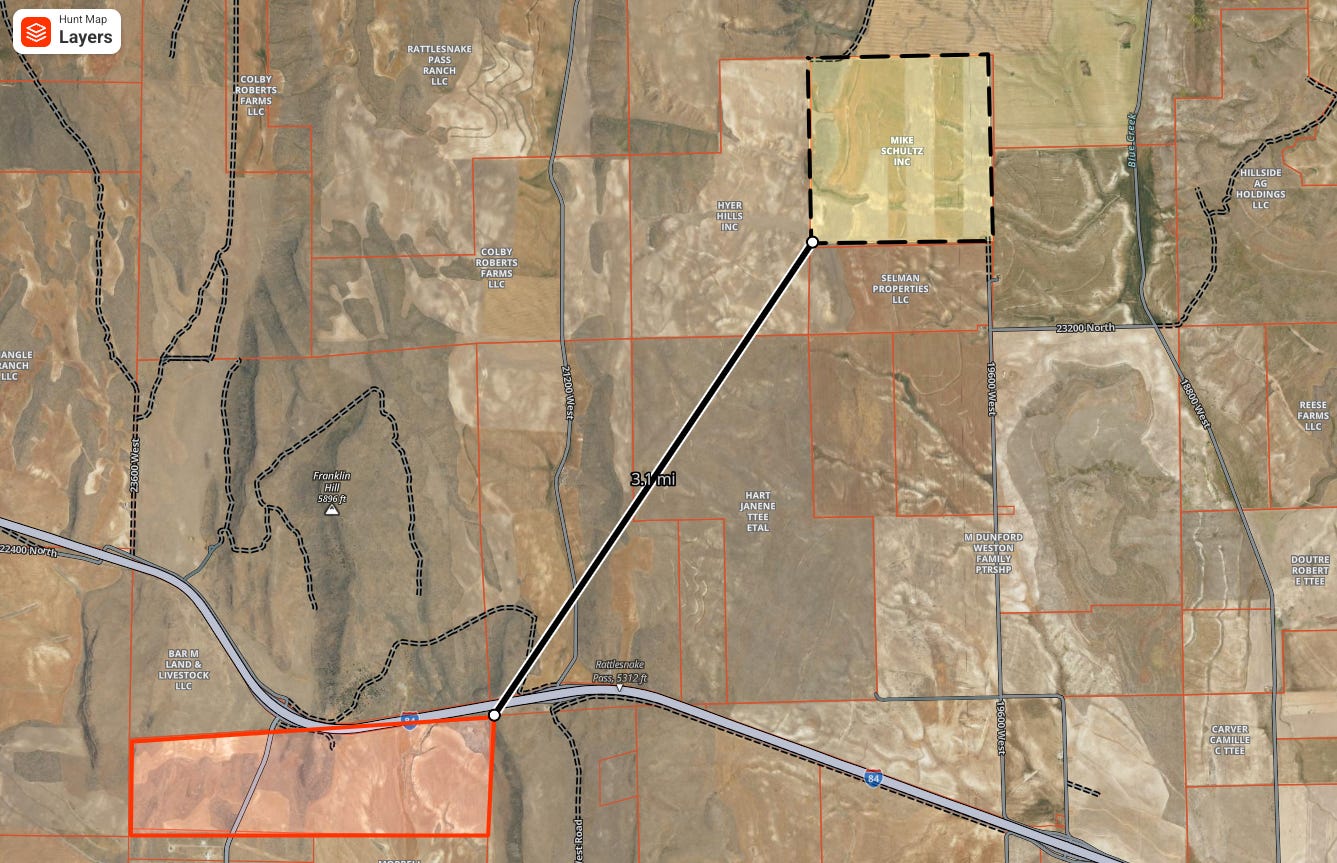
That northernmost parcel of the Stratos Project has not been designated for data center operations. Box Elder County has said it could be used for manufacturing, retail, restaurants, hotels, and public works infrastructure. Which is, coincidentally, exactly the kind of development a residential and commercial builder might know something about.
A Brookings Institute report published this year found that rural communities across the country are increasingly facing “high-pressure decisions regarding land use, fiscal policy, workforce development, and resource management” — often before local leaders have the staffing, expertise, or plans in place to respond. The report noted that confidentiality agreements between developers and local officials can “make residents feel blindsided and at a disadvantage.” The Salt Lake Tribune reported that at least one Stratos landowner told them they were already bound by a nondisclosure agreement barring them from discussing the deal’s details.
According to LandApp, a real estate data platform tracking data center development, rural properties near major transport routes and power infrastructure have become “prime real estate for data center developers, who are often willing to pay premium prices for land that meets their specific criteria.” Properties that may have been overlooked for traditional development — like, say, ranch land near a freeway interchange — can carry significant untapped value once a hyperscale campus is announced nearby. Sometimes 2-4x agricultural land values.
The numbers from the country’s most mature data center corridor illustrate the trajectory. CBRE has documented that data center land value per parcel in Loudoun County, Virginia, now runs sixteen times higher than the next highest land use. Data centers make up 26% of the county’s entire real estate tax base. Earlier this year, one developer was offering landowners $4.4 million per acre for residential properties near existing data center zones. Now, we know, Loudoun County is not Box Elder County, and a rural Utah corridor is not Northern Virginia. But it is the documented pattern of what happens to land values when hyperscale development takes root.
That pattern is also why the construction phase matters, not just the operational one. A 2026 Construction Dive analysis noted that a significant share of data center-related work is “occurring around the data center rather than within the building footprint” — roads, utilities, power lines, logistics infrastructure, all of it requiring staging, access, and land near the build.
West GenCo co-founder Austin Pritchett told residents at the Box Elder county hearing that each gigawatt of the project equates to roughly 1,000 jobs. According to JLL, for every direct job inside a data center, roughly three to four additional jobs are created in the surrounding local economy. Phase 1 alone is 3,000 gigawatts. And all those workers need somewhere to live, eat, fuel up, and stop for coffee.
Schultz is not the only Utah elected official who appears to be holding land in that position. Senator Scott Sandall — who represents Senate District 1, which covers Box Elder County, and who sponsored SB132, the 2025 bill that created the specific legal framework that made Stratos possible — has his Sandall Farm & Ranch Family Partnership listed roughly 4 miles away from the proposed site. ABC4 reported that when Sandall was asked whether anyone had approached him about selling, he said he had not been contacted — but that he would not be opposed to it, for the right price.
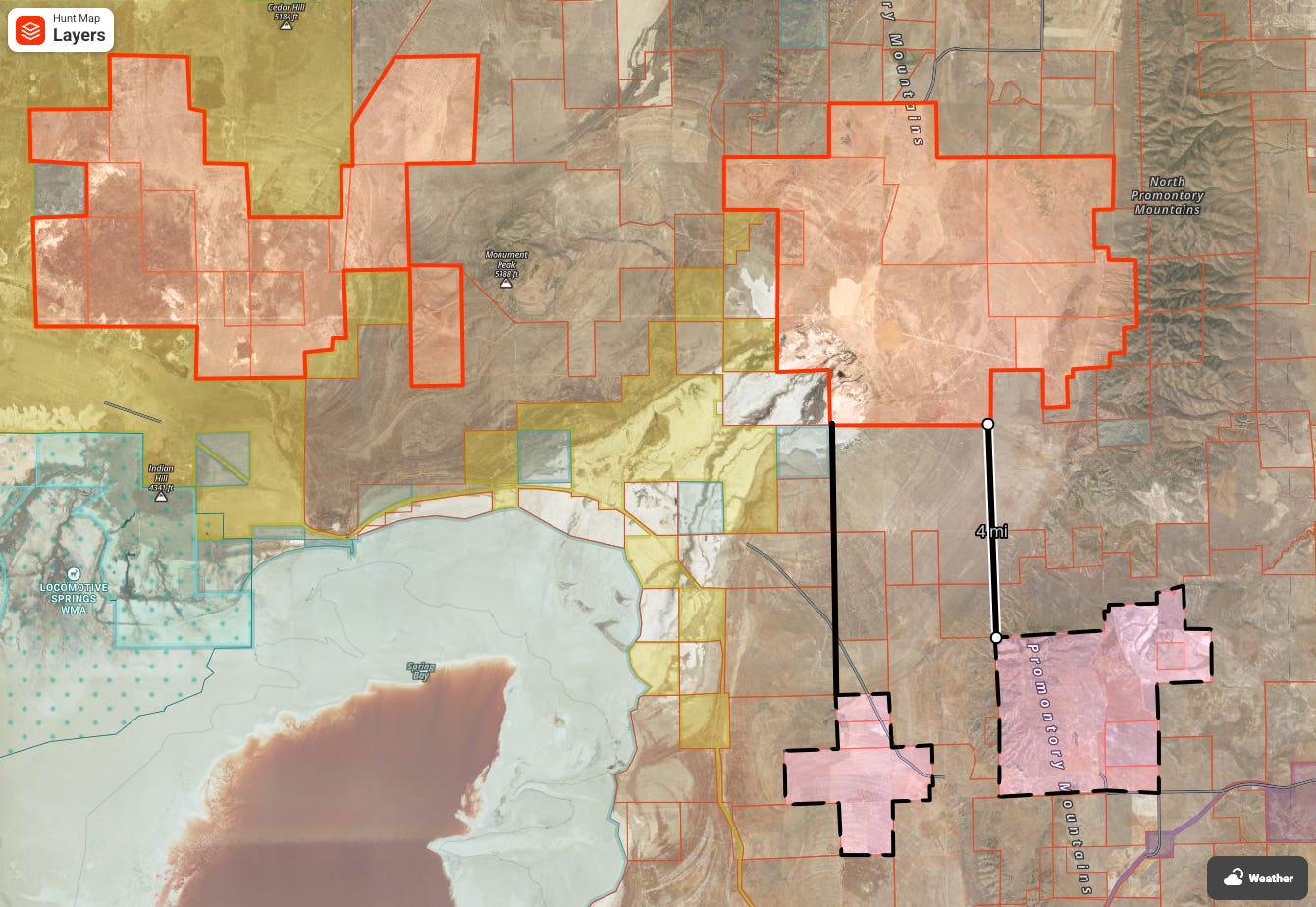
View an interactive (very roughly made by Jackie and not 100% accurate) map of the Stratos Project Area and Schultz and Sandall’s property ownership here.
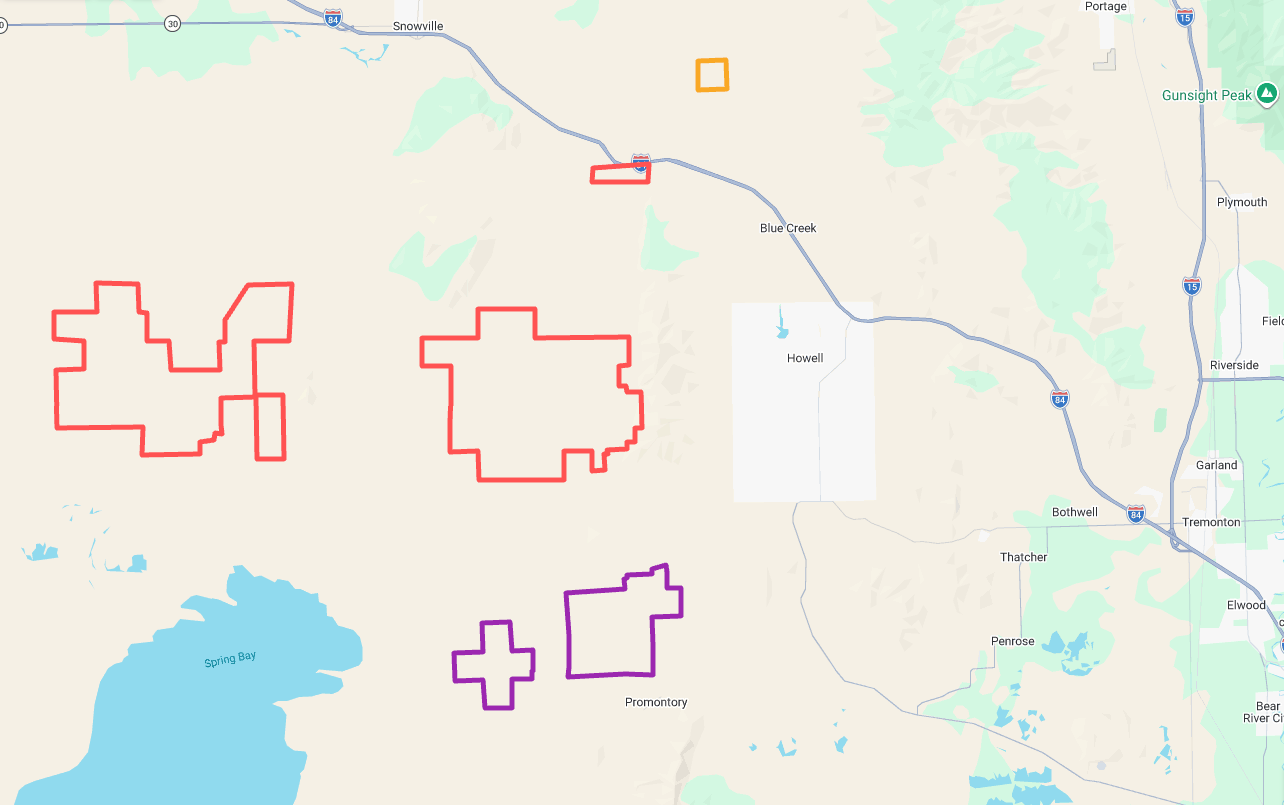
Turning your land from a real farm to a server farm is one of the most direct ways a landowner in this position can benefit. Some landowners inside the project zone may sell directly to the developer. And MIDA documents indicate that 100% of the landowners must consent to their land being included. But others sitting adjacent may find that the project turns their land into something considerably more valuable than ranch land without ever selling an acre.
Now, maybe nothing happens with Schultz’s 640 acres, or with Sandall’s ranch, or with any of it. Maybe it all stays exactly as it is. Maybe this is all perfectly above board.
But if that is true, Utahns should not have to take it on faith. They should be able to see it clearly. And that is where the disclosure system was supposed to help.
Please Enjoy This Very Transparent Black Box
Here is how Utah’s public disclosure system is supposed to work: legislators file annual conflict of interest forms so Utahns can see where private interests and public power might overlap. The idea is to make potential conflicts visible before decisions are made, not after everyone has already signed off and gone home.
One of Schultz’s disclosed entities is Mike Schultz Inc. Its listed description on his conflict of interest form is two words: ”Holding Company”.
That’s it. No descriptions. No details. No parcels. No Box Elder County. No 640 acres. No deed recorded four days before the form was filed. Just: “Holding Company”.
And under Utah law, which Republicans have created, this is completely legal. And this is precisely the problem.
A holding company is a legal wrapper. It can hold land, buildings, investments, other companies, or any combination of the above. Utah law requires legislators to disclose the wrapper. It does not require them to tell you what is inside the wrapper. There is an optional section, Item 6A, where legislators can voluntarily identify real property they believe may create a conflict of interest. Schultz has left that section blank every year he has a conflict of interest disclosure on record.
A 2024 investigation by the Utah Investigative Journalism Project found that Schultz had four real estate entities missing from his disclosure entirely and only added them after a reporter inquired. The Legislature’s explanation was that the oversight occurred because he “no longer oversees the day-to-day operations.” Even with those corrections, the law still does not require him to tell the public what those entities own.
So when Mike Schultz Inc. received those Box Elder County parcels on January 3, 2025, here is what the disclosure system produced: NOTHING. Four days later, on January 7, Schultz filed his annual form. Mike Schultz Inc. was listed without any details. Same as before.
Paging Mr. Wonderful’s Audit Team
Kevin O’Leary wanted a forensic audit. And, honestly, now, same.
An audit of the timing of these meetings, the deeds, the 10 dollars, the holding companies, the disclosure forms that have said “Holding Company” for years, while the land inside them went undisclosed. An audit of the gap between when powerful Utahns appear to have been positioned around a massive development deal, changed the law, and when the rest of Utah was allowed to find out about it.
We are not Chinese operatives. We are Utahns who think you should be able to see whose names are on the land and who stands to benefit before the concrete gets poured — and who think that figuring this out should not require a backcountry skier, a Box Elder County Recorder login, and several nights of not sleeping.
So yes, Kevin. Please open the books.
Wow! ASTONISHING PIECE OF INVESTIGATIVE REPORTING! Congratulations! You are two extremely competent citizens and Utah is so fortunate to have you looking into this data centre. Please stay safe. Can’t wait to read more! I have subscribed.
Wow! Dude, don't piss off Utah women!