

Editor’s note from Jackie, Gabi, and Ben
We’re doing something a little different today. For the first time (ever!), we’re handing over the Substack to the people who do so much of the work behind the scenes at Elevate. But before we let them loose in your inbox, we have a few things to say about them.
We have the best team in the world. And we don’t say that lightly. One of the greatest privileges of building Elevate has been getting to work alongside people who care as deeply about this work as we do. Josh, Tia, and Ben put an extraordinary amount of themselves into every campaign. They care about our clients as people, not just candidates. They celebrate their wins, carry their disappointments, worry about the things that keep them up at night, and take every race personally in the best possible way.
Campaigns are hard. They’re long hours, impossible deadlines, constant problem-solving, and a thousand little things that nobody ever sees. And so much of what made this year possible happened behind the scenes, because these three showed up every single day and gave a damn.
We’re incredibly proud of what we accomplished this year. But we’re even prouder of the people we got to accomplish it with. Getting to build something with people you admire, trust, and genuinely love spending your days with is a pretty special thing.
So today, we’re handing them the keys to the Substack to tell you what this year looked like from their side.
Jackie, Gabi, and Ben
Hi! We’re Josh, Tia, and Ben (yes, there are two Bens at Elevate and yes, it causes as much confusion as you’d expect). We’re the staff at Elevate who work behind the scenes on campaigns. Today, we logged in to the Substack to share our thoughts. We’ll try not to let this newfound power go to our heads.
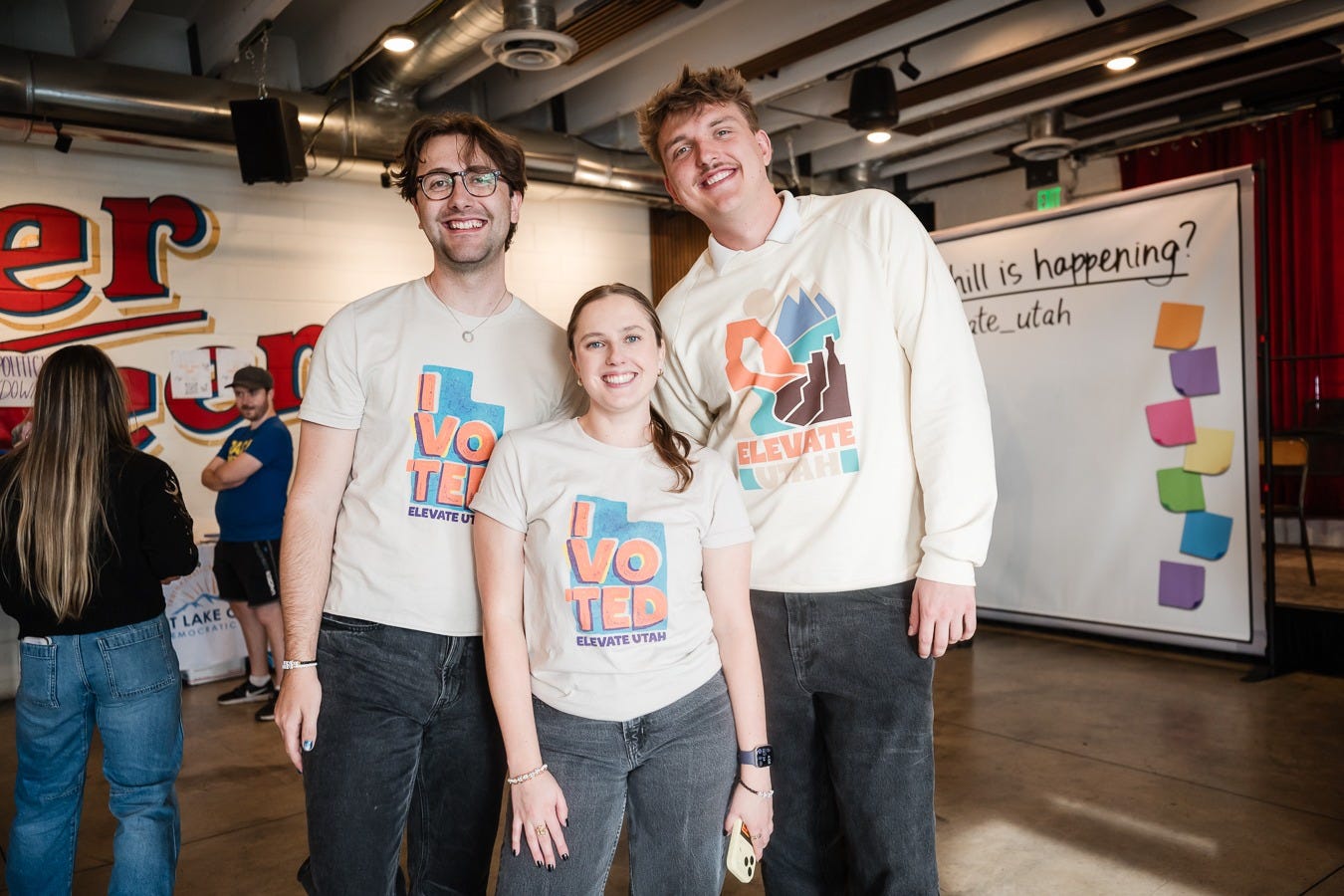
All three of us ran races with Elevate in 2024. If you remember how that election went, you’ll understand why we spent a long time recovering from the results and from what they meant for the state of the world. But we didn’t give up hope. We made it through the 2025 municipal elections and willingly signed ourselves up to do it all over again for the whirlwind we knew 2026 would be.
And what a long year it was. But well worth it.
In case you’ve been avoiding every news article, social media exclamation, or meme: Utah House Republicans lost 16 seats and, with them, their supermajority. Senate Republicans lost 2 seats. Ben McAdams is headed back to Congress to hold down a blue vote at the federal level. Voters rejected Amendment B by over 60% (ironic, given the amendment tried to make 60% the new majority). And perhaps most remarkably, more Utahns across the state voted for a Democrat over a Republican for Congress. Utah’s overall congressional vote shifted almost 30 points since 2022, the biggest shift in the nation. So, needless to say, we are extremely proud to have been a part of this.
But enough with the numbers. We thought we would write about what it actually looks like to run a campaign behind the scenes (and win).
First, Find Someone Willing To Do This
Before you can win an election, you need a candidate. Preferably a really good one. Someone who will put hundreds of hours into fundraising, knock doors in every weather condition, and be willing to show up at every event.
We were lucky to work with an incredible group of candidates who exceeded all expectations on that front. Some of them even had to win three elections this year.
Because our party system uses a convention and a primary, we have to do way more than just think about November 3rd. First, candidates compete at their party’s convention, where delegates vote to select nominees. But candidates can also gather signatures to qualify for the primary ballot, which means winning convention doesn’t necessarily mean you’re done. If multiple candidates qualify, then there’s a primary. Then, assuming you’ve survived all of that, you finally get to run in November.
If that sounds complicated, it’s because it is. While most folks only tune in for elections in October, for us it began in January. This year, we’ve been working hard, supporting candidates on 8 convention campaigns, 5 primaries, and 9 general election campaigns. Which means we have already experienced several election nights before most people even started thinking about an actual election.
Our incredible roster of candidates this year included:
Andrew Stoddard (Utah House District 40) - convention & primary election (unopposed for the general)
Angela Choberka (Utah House District 9) - general election (flipped seat!)
Erin Jemison (Utah House District 34) - convention & primary election
Jake Fitisemanu (Utah House District 30) - general election
Jen Dailey-Provost (Utah House District 22) - general election (whopping 90% of the vote!)
John Arthur (Utah House District 41) - convention & general election
Liz Oates (Utah House District 27) - general election (flipped seat!)
Rosemary Lesser (Utah House District 10) - general election (flipped seat!)
Sarah Brough (Utah House District 39) - convention
Silvia Catten (Senate District 13) - convention, primary, & general elections
Sim Gill (Salt Lake County District Attorney) - convention, primary, & general elections
Stephanie Pitcher (Senate District 14) - convention & primary elections (unopposed for the general election)
Zach Robinson (Salt Lake County Council At-Large) - convention & general election (flipped seat!)
We could write an entire newsletter about each of these people, because we become completely and totally normally attached to them, but we’ll spare you. For now.
The important thing is that these candidates showed up. Over and over again. And if there’s one thing we’ve learned from working in Utah politics, it’s that you can’t build a competitive state without people willing to do the deeply unglamorous work of competing.
Then, Find the Right Message (Thank You, Republican Supermajority)
Before a candidate can get very far, they need something to say. This sounds straightforward until you realize you’re trying to communicate with tens of thousands of people who have different priorities, different political opinions, and very different levels of interest in hearing from you.
Not to mention, here in Utah, we typically aren’t blessed with giant budgets to do polling, focus groups, and presidential-level message testing. So our job is to find a message that connects to the concerns of the person asking for their vote.
This year, we had somewhat of a cheat code. The Republican supermajority spent a considerable amount of time making our argument for us. Very generous of them. Between the national political environment and a Utah Legislature that seemed more concerned with protecting its own power than addressing the problems Utahns actually face, voters were frustrated.
At every door, candidates already agreed with voters: costs are too high, and no one’s listening. Our candidates didn’t need to convince voters that those frustrations were real. They were frustrated too.
The challenge was showing voters that there was another option, and that voting for a Democrat in Utah wasn’t some radical act of rebellion. It was a perfectly reasonable thing to do when you wanted your representative to actually represent you.
We spent months crafting, refining, and repeating those messages. And because we’re campaign people, we’ll use this opportunity to show off some of the ads we made (one of the most fun parts of this job):
We’re biased, but we think they’re pretty good.
Now Be Professionally Annoying for an Entire Year
Now for the part of campaigns that everyone loves to hate. The texts. The mail. The phone calls. The people knocking on your door while you’re trying to eat dinner.
Hello. It’s us. We’re the problem.
Here’s the thing: A brilliant message and an excellent candidate don’t mean much if nobody knows about either of them. Getting it in front of people is the real work, and it’s not glamorous. It’s knocking doors for hours, day after day for months. It’s running your phone battery dead and yelling into an empty void (otherwise known as texting people repeatedly even though they never respond).
Before anyone knocks a door or sends a text, we’ve spent hours deciding which doors to knock and which phones to text. Campaigns can’t reach everyone, so we build lists: prioritizing who gets mail, who sees a YouTube ad, who gets a text, or a knock on their door. That targeting is how a campaign makes every voter-contact dollar count.
Does that sound exciting? To us, unfortunately, yes.
Then we have to actually contact everyone. This year, our campaigns:
Knocked 89,806 doors.
Sent 541,891 texts.
Made thousands of calls.
And sent a whole lot of mail.
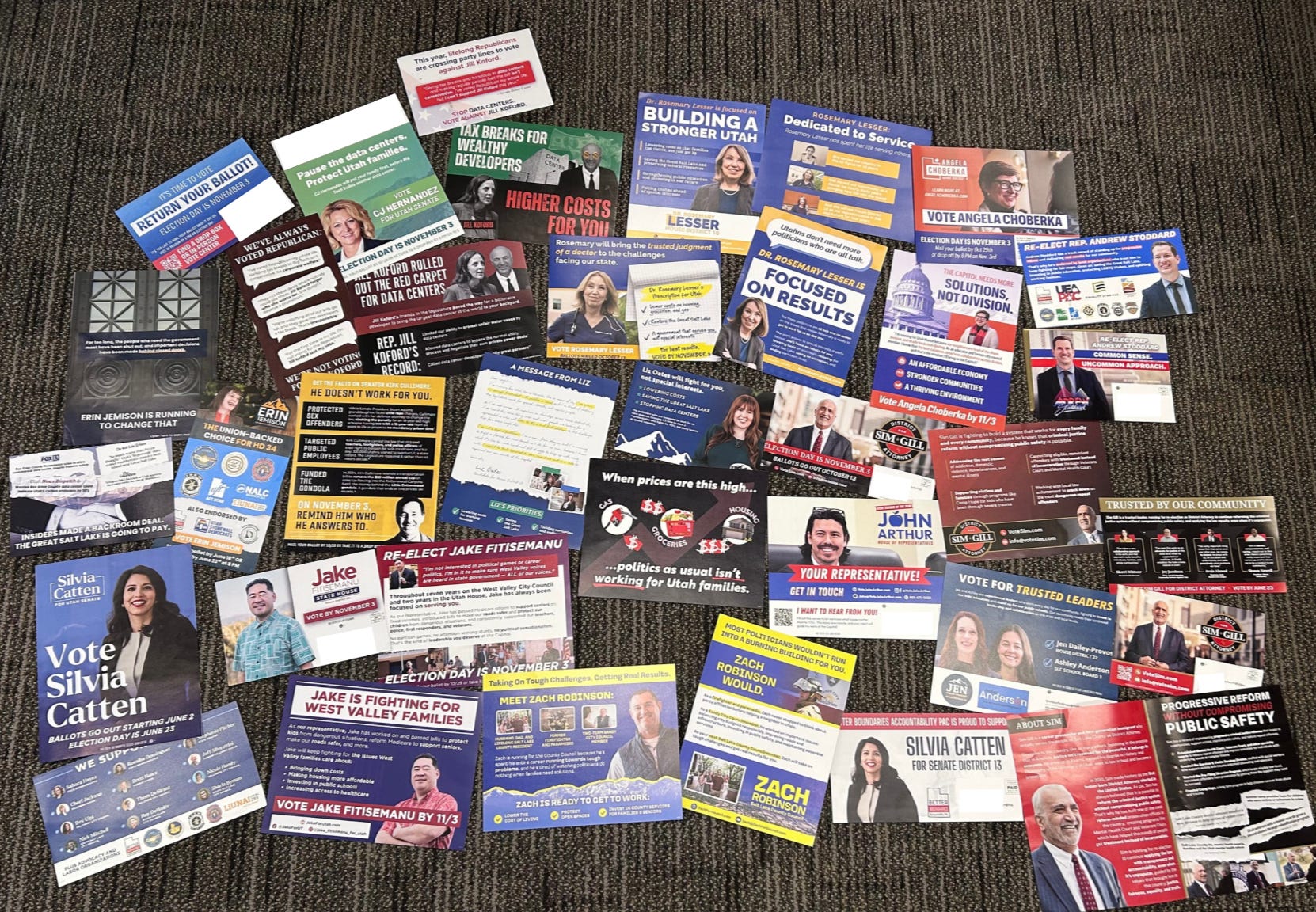
And a quick public service announcement about those campaign texts you replied “STOP” to (or something less polite and considerably more vulgar): there’s a real person behind them. (Hi, it’s us). We read every reply.
We have been called communists, fascists, demons, and criminals, all in the same message. We contain multitudes, apparently.
But here’s the frustrating part for everyone who wishes we’d stop: it works (or we wouldn’t do it).
The annoying texts work. So does the mail you take to the recycling bin. Yes, you can opt out of texts and throw out the mail, but you’ll still see it. So do the door hangers, the digital ads, and those conversations on your doorstep that you weren’t expecting to have.
Yes, we know we’re being annoying. But getting in front of voters before an election, however we can, and as often as we can, is how campaigns win. So we will continue to read the most wild things voters can come up with in response to asking if they plan to vote. And if they don’t reply, we’ll find another way to keep asking anyway (sorry, not sorry).
Especially in the digital age, when our brains are being bombarded by small, medium, and large screens (sometimes all at once), sometimes a physical piece of mail or an actual conversation with another human being is what finally gets through. If anyone else has a better way to introduce a candidate, make the case on an issue, or remind someone their vote matters, we’re all ears.
Democracy Is Expensive. Rude.
Money?? In politics?? Gasp.
We’d love to tell you that campaigns run solely on vibes. They don’t. It unfortunately does take money. Every flyer, mail piece, digital ad, yard sign, campaign event, and volunteer snack has a price tag. And while volunteers will do some truly incredible things for democracy, we have learned that feeding them occasionally is generally appreciated.
And for every campaign, early money means the ability to set up a campaign that can make it across the finish line. Early money lets candidates hire staff (hi!), build an operation, and start talking to voters before their opponents have even figured out who they’re running against. $10 in March can mean more than $100 in October. (Not that we’d ever turn down money that comes in October; please continue donating to candidates).
Our job is to make sure the money candidates work incredibly hard to raise gets spent on things that actually help them win. And we spend it. There’s a saying in campaigns that they’re built to crash. You spend months raising as much money as possible, then spend months trying to make sure there’s almost none left by Election Day. In virtually any other business, this would be a concerning financial strategy. In campaigns, it’s the goal.
So we budget, rebudget, move money around, and sometimes have deeply emotional conversations about yard sign costs. Then we spend it all. Preferably on winning.
The People Who Make Our Jobs Possible
Campaigns take a village. Beyond paid campaign staff (shout-out to this job), candidates need volunteers and supporters. These are the folks knocking doors alongside them, hosting their events, and convincing their neighbors to vote.
Volunteers are one of the most crucial pieces of any campaign, and some of the hardest to find and keep. They are the one piece of a campaign that money can’t buy. A group of community members who genuinely believe in a candidate is worth more than almost anything else we can spend a candidate’s money on.
If you helped a campaign this year: thank you. We see you, and we’re so grateful. And we will probably ask you to do it again soon.
Election night: Refresh, refresh, refresh
A confession: we are a deeply superstitious bunch. Ask any of us how a race is looking in the final weeks, and you’ll get the same answer every time: “We’ve done everything we can. We ran the best possible race we could.” We don’t make predictions. We don’t say the W-word. We certainly don’t tempt the election gods.
By Election Day, we have done literally everything we can do. So naturally, we begin exploring alternative methods. So, we spend the day anxiously twiddling our thumbs, burning incense, consulting crystals, thinking about hiring an Etsy witch, and wearing our luckiest socks.
At some point, a room full of professional political operatives starts behaving like a medieval village waiting for news from the oracle. We’d like to say we’re joking.
Then the polls close.
For the first time in months, there are no more doors to knock, no more voters to text, and no more ads to run. There’s nothing left to do but wait. And refresh. And refresh again. And again.
When the first results dropped this year, we were huddled around a screen, trying to quickly make sense of what we were seeing. At first we were cautiously optimistic. Then confused. Then suspicious. Then we started refreshing the results even more aggressively, as if the numbers might suddenly realize they’d made a mistake.
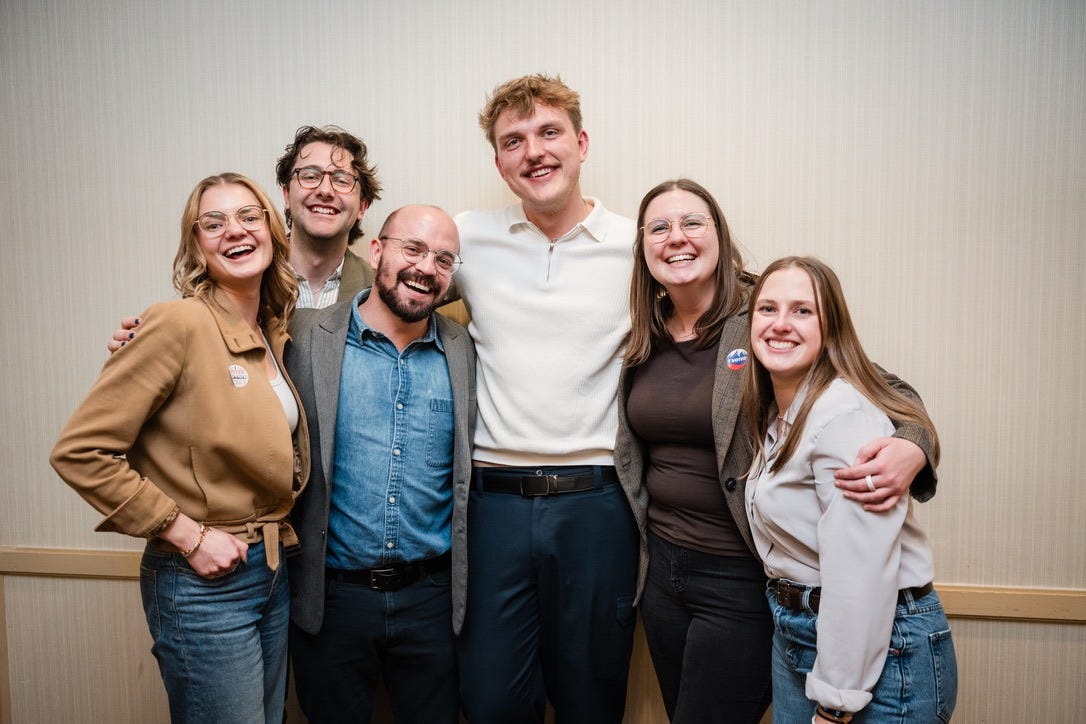
Then, it all slowly dawned on everyone how big this was. Jaws dropped. There were tears, hugs, and the slightly unhinged laughter that comes with your brain trying to process something you’ve spent an entire year hoping for but were too afraid to actually expect.
Democrats were on track to win. And we did. Democrats in the Utah House doubled, Democrats flipped two Utah Senate seats, Ben McAdams is headed back to Congress, and we flipped the Salt Lake County Council for the first time since 2011.
We won every single race that we worked on. Every. Single. Race.
The celebrations lasted until 2 AM, fueled by adrenaline, relief, and the tradition of cracking Red Bulls election afternoon.
So, Now What? (Besides Sleeping)
We can’t expect every year to look like this one. Maybe that’s leftover 2024 trauma talking, but we’re being realistic. Republicans still control both chambers, and the Senate supermajority is still intact.
So we’re already gearing up for two years from now, when every Utah House seat is back on the ballot, and the next set of Utah Senate seats are up. The goal hasn’t changed: we’re still shooting for a blue Utah.
The difference now is that Democrats, in many cases, will be doing it as incumbents. And the Republicans will be the ones trying to take those seats back.
For years, people have treated Utah Democratic campaigns like a lost cause. Candidates were told they couldn’t win. Donors were told their money would be wasted. Voters were told that electing Democrats in Utah was basically impossible. We just spent an entire year proving otherwise.
And we got to see exactly how it happened. The results were extraordinary. But the work that produced them wasn’t magic. It was something we can do again.
And we want you to be a part of it.
Stick around for the legislative session. The Legislature comes back in January, and so do we. We imagine they’ll give us plenty to talk about.
Support the next wave of candidates. The 2027 municipal elections and 2028 legislative races will be here sooner than you think. Or, if you’ve ever thought about running yourself, we’d love to talk.
Become a paid subscriber. Get the hot gossip, hotter takes, and the deeply nerdy data dashboards that we promise are more interesting than they sound.
Chip in early. Remember that whole thing about $10 in March? We meant it. Winning these seats was expensive. Keeping them won’t be free.
As for us, we’re going to enjoy this one a little longer.
Gabi, Jackie, and the other Ben will return to your inbox soon with their regularly scheduled opinions. We assume they’ll have plenty. They usually do.
We’re going to take a well-deserved nap, put our phones on do not disturb, and spend some quality time with people who don’t know the difference between a persuasion and turnout universe. Then we’ll get back to work.
Because we fear we may have developed a taste for winning.
Josh, Tia, and Ben <3