


I. Vibe Check
Hi. Hello. We’re here. Today, we put on real pants, dusted ourselves off, and got back to work. We took a week to “rot max” (Gen Z’s words) and embrace “airport lounge rules” where time, drinks, calories, and money don’t exist. It helped a little, but now it’s time to get moving.
Calling this “not the outcome we wanted” barely scratches the surface. Nationally, the losses were sweeping; locally, they hit just as hard. If you’re feeling like you got swept up in a political tidal wave, sucker-punched, having flashbacks to 2016, or maybe just got a little too high on the hopium, you’re not alone. Brat summer turned into fascist fall quicker than anyone expected. Whether you’re rage-cleaning, doom-scrolling, or quietly tearing up at your desk, we get it.
Before we resign ourselves to despair for the next four years, let’s take a moment to breathe, reflect, and consider what’s next. What does this mean for the landscape we’re moving into? And more importantly, what can we learn to move forward with purpose?
Buckle up because this is a long one.
Historical Context and Perspective
This isn’t our first rodeo. Politics is a pendulum, swinging back and forth, bringing both challenges and opportunities. Think back: in 2018, 2020, and 2022, we saw incredible Democratic wins driven by grassroots energy and local organizing. Losses, like the one we faced this year, remind us of the work still to come. In 2016, after a shocking defeat, progressives didn’t retreat; they rallied. Out of that loss came movements that reshaped the Democratic coalition, like Pantsuit Nation and Indivisible, which built a more resilient progressive network across the country.
Without those grassroots movements, would we have had the 2018 blue wave, the 2020 Democratic sweep, or 2022’s victories? Setbacks like this aren’t endings; they’re pauses to reflect and readjust. And while Utah focuses on its own battles, know this: the Utah GOP is taking notes on us too. Don’t doubt that our efforts are being noticed. Let’s dig deeper, strategize smarter, and build a future reflecting Utah’s evolving majority.
II. So….(not to quote Hillary Clinton but….) What Happened?
Look, we know: by now, you’ve probably heard every possible take, analysis, and breakdown of what went down this election cycle. Nothing we’re about to say is new or groundbreaking, and it certainly doesn’t make any of these truths any easier to swallow. But here are some of our key takeaways—lessons learned for moving forward and thoughts on how we can recalibrate. This is for those who are ready to dive in—maybe reluctantly, but still curious about what we can do better next time. But if you’d rather skip straight to our Utah insights (arguably the best part), scroll down. We won’t judge.
No Clear Scapegoat for Democrats
This year, Democrats can’t lean on a single reason or surprise for these losses. No Comey letter, no Russian interference plot—this time, the challenges are more complex. We had an unpopular incumbent, a last-minute ticket swap (without giving people an option), and an opposing party capitalizing on racial and economic divisions. It’s time to acknowledge the need to rebuild from within. Yes, there were strong Senate wins in states like Arizona, Nevada, Michigan, and Wisconsin, and successful ballot initiatives that show the foundation is there. But we need to recalibrate: build stronger coalitions, refine our messaging, and show up consistently.The People Are Speaking (Even if We’re Not Listening Closely Enough)
Trump expanded his support across most demographics, including Latino and Black voters, signaling a shift we can’t ignore. Too often, Democrats see these groups as guaranteed turnout targets rather than as persuasion targets we need to engage meaningfully. These voters, “soft swing” voters (as we affectionately call them in Utah), can’t be expected to show up without sustained, genuine outreach. If we treat communities of color as electoral footnotes rather than essential coalition members, they will continue to drift. We need to be present—not just when we’re seeking votes, but throughout the year, in ways that recognize their needs and contributions.Youth Vote: This One’s Complicated
Young voters showed up, but not with the same enthusiasm as in 2020. Harris won among youth, but by narrower margins, and young men are increasingly favoring Republicans. Gen Z and Millennials care deeply about climate, healthcare, human rights, and economic fairness, but they feel let down by both parties. Young men, in particular, leaned Republican, and as Gabi’s 21-year-old brother said, “She shoulda done Rogan.” For Democrats, the message is clear: we need to treat youth issues as our issues. Lofty promises and virtue signaling won’t cut it; we have to make it clear we’re invested in delivering real progress on the issues they care about. And while Biden passed landmark legislation about the climate and economy, young voters didn’t know about about - see #6 and #7.The Working-Class Disconnect
Working-class voters are increasingly disillusioned with the Democratic Party. Despite Biden’s pro-labor presidency, this sentiment isn’t breaking through, especially in regions hit hard by economic instability. Trump, for all his faults, positions himself as the anti-establishment champion. If Democrats are serious about reconnecting, we need policies that address core concerns like healthcare costs, job stability, and inflation—and we need to be in these communities year-round to show we’re serious about change.Sure, We Could Blame Misogyny and Racism—But Will That Help Democrats Win?
Let’s be real: bias against women, especially women of color, is a deeply ingrained issue. There’s no doubt candidates like Kamala Harris face exceptionally harsh judgment their white male counterparts don’t. But labeling every Trump voter as racist or sexist won’t win hearts and minds. Rather than making voters feel defensive, we can emphasize the benefits of diversity in leadership, and why our candidates’ policies matter in real, everyday terms. People don’t respond to finger-pointing—they respond to feeling included. Acknowledging bias exists is one thing; finding ways to rise above it and connect with voters is the strategy that wins. That doesn’t mean you need to become best friends with a Trump supporter and try to Inception them out of their biases, but it does mean that we as a Party and as strategists can’t write them off.The Disconnect Between Policy and Experience
Biden’s policies have had positive effects, but many were implemented too slowly for people to feel the results. Telling people the economy is doing well won’t resonate if they aren’t seeing it in their paychecks. Democrats need to move faster to make sure voters experience the benefits firsthand. Good policy isn’t enough; it needs to translate into immediate impact. That said, we are not looking forward to watching Trump take credit for the Biden economy he’s inheriting, just like he did with Obama’s economy in 2017.Navigating a New Media World
Calls for a “left-wing Joe Rogan” miss the point. What we need isn’t a single influential voice on the left but rather a consistent, trusted presence in the spaces where people are already tuning in. Reaching people where they already are and showing up with a voice that’s relatable and real will build more trust than any one platform, poll-tested message, or personality ever could. Elections are won in years, not months. We can’t just show up on a popular podcast and expect to break through.
So there you have it. These aren’t magic fixes, but they’re grounded realities. Moving forward means learning from these lessons and adapting our strategies in a way that resonates with all voters—not just the ones we feel comfortable talking to.
III. Utah - you are the only exception?
Now that we’ve wallowed a bit in the national scene, let’s talk about Utah. Because while the rest of the country went red, Utah, somehow, managed to buck the trend. Call it unexpected, call it refreshing, or maybe just call it a glimmer of hope in an otherwise bleak political season.
Utah’s Lone Blue Shift
Amidst the national red wave, something remarkable happened in Utah. While 49 states in this country shifted right, Utah bucked the trend, shifting left (slightly. But still.). That’s right. Democrats here outperformed the national average, and Republicans underperformed. Even Nate Silver noticed it. In a Substack post, he said that Utah voted 6.9 points to the left of where his model would have expected given the national environment. His model showed Utah as Trump's largest underperformance across the country. It’s a strange but exciting twist, and it shows that Utah has something unique brewing beneath the surface. These shifts aren’t just anomalies; they’re signals. Utah isn’t immune to change. It’s part of it and in some ways, we’re leading it.
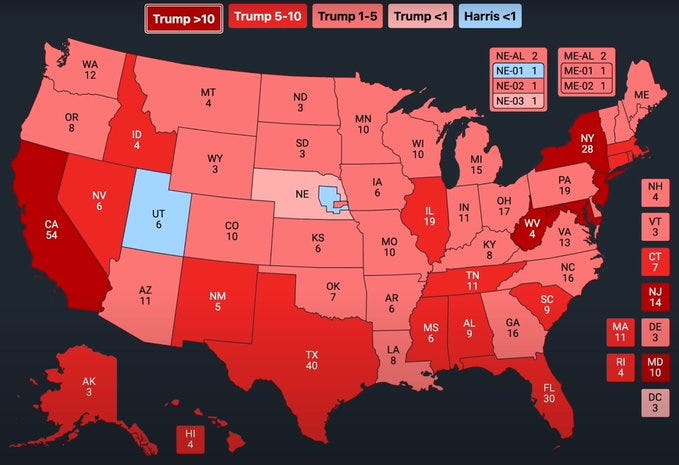
LDS Voter Shift in Utah
One of the most notable factors in this shift is a change in voting patterns among LDS voters, particularly younger LDS voters. According to exit polling from Fox News, LDS voters were the only religious group where Harris saw an increase in vote share, moving from 23% for Biden in 2020 to 33% this year. This builds on a trend we saw in 2020, where nearly half (47%) of LDS voters under 40 voted for Biden, showing a clear break from the historically Republican loyalty of the LDS community. This isn’t just a blip—it’s the beginning of what could be a significant realignment.
For the first time, we’re seeing cracks in what has long been considered a monolithic Republican base among Latter-day Saints. Younger Utahns—particularly those from LDS backgrounds—are rethinking their political affiliations and looking for values that align with their vision for the future. That vision increasingly includes Democratic candidates, especially on issues like healthcare, immigration, education, and social justice. This shift is historic. It’s the start of something that could reshape Utah’s political landscape in the long run, and it’s on us to nurture it.
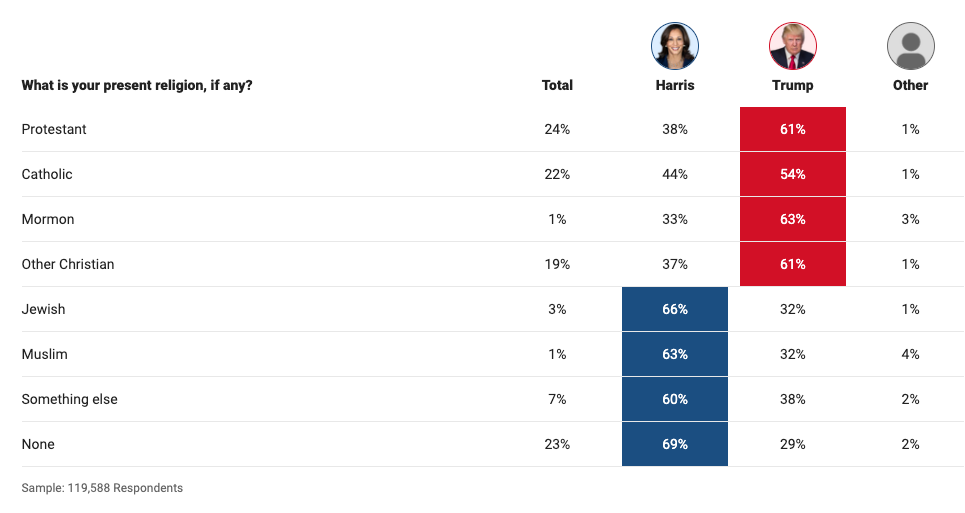
So, What Can We Learn?
Utah’s shift, however slight, underscores a few key takeaways that we can’t ignore:
Younger Voters Are Ready for Change: Younger LDS voters are clearly more open to Democratic candidates and issues than their predecessors. This isn’t just about party loyalty; it’s about values and the future. To continue attracting these voters, we need to speak to their concerns consistently—not just during election season.
Embrace Our Unique Role: Utah has a chance to be an outlier, and that’s something worth celebrating. We don’t have to follow the national script; we can set our own pace. With growing discontent among traditional GOP bases and the gradual leftward shift, there’s an opening for Democrats to be the voice of practical, values-driven solutions that resonate with Utahns across party lines.
Let’s Stop Voting for “Moderate” Republicans: It’s time to recognize that supporting so-called moderate Republicans isn’t helping us make real progress. When Democrats back moderate Republicans, we’re diluting our own influence and making it harder to build momentum for real change. If we want to move forward, we need to coalesce around our own coalition and bring moderate voices into the Democratic fold rather than relying on half-measures. This election showed that unity matters more than ever, and it’s time we focus on building a strong, cohesive base that represents Utah’s evolving values.
Invest in Local Leaders and Engage Year-Round: Building a sustainable, long-term coalition means supporting Utah’s local leaders and grassroots organizations who are working tirelessly on the issues that matter here: affordable housing, water management, healthcare access, and education. This also means actively reaching out to rural communities and engaging in ongoing conversations beyond our usual circles.
Long-Term Vision is Key: While a purple Utah might not be imminent, it’s not out of reach in the long term. Our challenge and our opportunity are to build on that momentum, keeping our eyes on 2040 rather than just the next election cycle. A full playbook for Utah politics is on the way, laying out a blueprint to make this vision a reality.
Utah has shown us that change, even here, is possible. And while it might feel small in the context of a broader national shift, it’s a foothold. It’s a spark. So let’s treat it as the beginning of something bigger—a chance to lead in a way that only Utah can. Let’s keep pushing, keep talking, and make sure that Utah’s blue shift isn’t just an exception, but a trend.
IV. Avoid the Traps – How Not to Get in Our Own Way
Let’s be real—after an election, it’s tempting to jump into blame games, knee-jerk reactions, and social media echo chambers. But as cathartic as a good rant can be, there are pitfalls that can end up doing more harm than good. To really move forward, we need to focus on building coalitions, maintaining perspective, and taking actions that make a tangible difference. The truth is, our best chance to grow is by learning from what didn’t work—steering clear of reactionary traps that hold us back. Here’s how we can keep our eyes on the prize, even when it’s hard.
Let’s Turn Down the Temperature
Yes, this election season was intense, and it’s easy to get swept up in “end of democracy” talk. But here’s the reality: it’s probably not. Constantly framing setbacks as crises risks creating fatigue, making people numb to issues that truly need urgent attention. And please, let’s stop with the “I’m moving to Canada” rhetoric. We need everyone here to fight back, not packing their bags.
Instead of fueling panic, let’s focus on steady, solution-oriented messaging that addresses concerns without implying catastrophe. Real challenges are ahead, but they don’t have to mean collapse. When we keep the temperature down, we make space for thoughtful engagement and show people a clear, hopeful path forward.
Avoid Pointing Fingers
There’s always a temptation to start assigning blame when things don’t go our way. But finger-pointing doesn’t build coalitions; it tears them apart. Constructive feedback is what we need, not a blame game. Let’s figure out what went wrong, learn from it, and focus on solutions.
Managing Emotional Fallout Thoughtfully
It’s okay to feel disappointed. It’s even okay to feel angry. But let’s channel those emotions into something productive. Instead of wallowing or getting reactionary, let’s use this moment to motivate ourselves and each other. We have work to do, and we need all hands on deck.
Don’t Burn Bridges
In the wake of this election, it’s easy to feel like anyone who voted for the other side is impossible to talk to, or even “unsafe.” But if we want to address the deepening divide in our country, we have to resist making everyone with different views “the enemy.”
This isn’t about forcing yourself to engage in political debates at Thanksgiving. It’s about recognizing that dismissing all Trump supporters as irredeemable only drives further division. For many, the choice might have hinged on specific issues like economic frustrations, not blanket support for everything Trump represents. Labeling and alienating only pushes people further away, losing any chance for dialogue or understanding.
Progress happens when we build bridges, not burn them. That doesn’t mean compromising your values or pretending to agree; it means resisting the urge to cut ties with people who see things differently. If we want a future that’s less polarized, it starts with choosing not to let any election drive us to isolation or resentment.
Avoid ‘Blue-Anon’ Conspiracy Theories
In times like these, it’s easy to get sucked into theories that don’t help anyone. Conspiracies about election rigging and doomsday scenarios only serve to distract us. Let’s focus on reality. We don’t need to buy into internet rabbit holes; we need to be better. And that’s okay.
No More ‘Blue Bracelets’ or Symbolic Gestures
We’ve all seen the black squares, the blue bracelets, the symbolic gestures. But right now, these actions alone aren’t moving the needle. And often, they only deepen divides by creating an “us vs. them” mentality. Instead of sharing hashtags or sporting a new bracelet, let’s turn that energy into real action: knocking doors, volunteering, or supporting candidates who align with our values. Real change happens through these direct efforts, not through performative symbols.
V. Why We Still Have Hope
A Resilient Path Forward
So, where does this leave us? Frankly, in a better place than it might seem. Yes, these results sting, but we’ve been through worse. This isn’t the end — it’s an invitation to adapt, to recalibrate, and to rebuild. Utah’s shift toward blue, however subtle, is proof that change is possible, even here. It’s not about immediate results; it’s about the steady, determined work that Elevate PAC and others are committed to. We’re here to push for progress, to make Utah’s voice heard, and to make sure this movement continues growing.
Looking Ahead for Elevate PAC
Next week, we’re unveiling our playbook for Utah Democrats. We’re putting together a vision for the future, and we want you to be part of it.
What do you want to see from us? Here’s what we’re thinking, but we’d love to hear from you (no, seriously reply to this email):
Trainings on having conversations across the political divide: Let’s make it easier to bridge gaps and have real discussions with friends, neighbors, and family members who see the world differently.
A united community ready to move forward together: We’re building something powerful here. But it only works if we stand together.
More spaces and channels for involvement: Want to volunteer? Want to get connected? We’re working on it. Tell us what would help you engage.
Candidate recruitment initiatives: The only way to build a Democratic future is to build a Democratic bench. Let’s find the next generation of leaders.
Detailed analysis on Utah’s political infrastructure, legislative sessions, and more: Want to understand how decisions get made in Utah? We’re here to break it down and keep you informed.
This moment is a turning point. Together, we have the chance to shape the future of Utah’s politics, to defend democracy, and build a state that reflects all of us. We’re here to do the work. We hope you’ll join us, and together, we’ll make Utah the place we know it can be.
If you’re motivated to get back into the fight, consider a contribution:
Elevate PAC is working to eliminate single-party control at all levels of our state’s government by elevating inspirational leaders, activating the new Utah majority, and centering our shared values and common purpose.
Our blueprint is to recruit and train candidates, invest early, support strategically, and build relationships.
Paid for by Elevate PAC
Spot on. Keep up the good work
I think training on how to talk to those who have always supported us, for me that means gay rights and women’s rights, who voted for DJT would be incredibly helpful. Right now my emotions are so high I don’t know how to even begin without blowing up.