

(Photo Credit the New York Times)
"You deserve what Kirk got." "Better sleep with one eye open. Utah isn't that big." "Look over your shoulder a bullet is coming for you."
Less than two hours after Charlie Kirk was murdered at Utah Valley University, these messages were flooding inboxes across social media. Toward us, other creators, commentators (on the left and right), politicians, candidates, and so many more.
And the threats weren't just coming from one direction. From the right: bullets and rape threats. From the left: anger at anyone grieving and processing. "Where were these tears for Gaza?" "Why weren't you this upset when Melissa Hortman was murdered?"
So here’s the thing: Charlie Kirk’s death is not normal, and it is not acceptable. Protest and disagreement are part of democracy, but violence is not – and we will say that over and over without qualification. Nearly everyone is united in saying political violence has no place in America. So why was condemning political violence met with more threats of violence?
What we were seeing wasn't really about the right way to grieve. It was about something more raw, everyone wanting to lash out, everyone needing someone to blame, everyone looking for a target for their rage and fear. This is what happens when tragedy strikes: the search for someone, anyone, to hold responsible becomes more urgent than actually preventing the next one.
The Questions That Keep Getting Heavier
This isn't the first time Utah has been in the national spotlight for political violence. In less than 2 months. After the previous tragedy, we wrote “This Isn’t Normal”. And a lot of that still rings true. The same questions keep repeating: How are we supposed to keep living like this? How do we stay human when politics keeps turning deadly? How do we continue trying to make our systems better? And for anyone trying to do this work out loud, how do we keep showing up when the cost is measured in threats, fear, or worse?
We keep asking people to believe in institutions even when institutions disappoint them. We tell people politics is worth showing up for, even when the outcomes feel hollow. But what happens when the very act of showing up—of speaking out, of engaging—makes you a target?

Photo credit The Hill
When Rhetoric Meets Reality
Our governor built a national brand on telling people to "disagree better." It's a message that sounds good in theory, but we've watched how it plays out in practice, too often as a way to avoid taking strong stances on anything that might be controversial. But within days of the UVU shooting, that same voice calling for better disagreement was on national television, wishing the shooter had been "from another country," insinuating leftist beliefs, and dragging the alleged shooter’s partner's transgender identity into the conversation. The instinct to find someone else to blame, rather than grapple with what's happening here, reveals how quickly the civility brand crumbles under pressure.
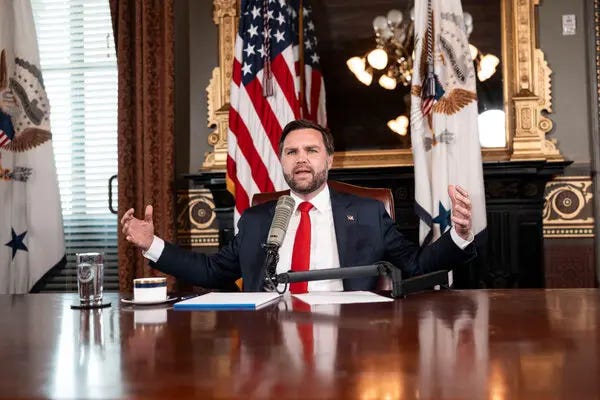
Or look at Vice President JD Vance, who went on Kirk's own podcast to endorse mass doxing campaigns. "We don't believe in political violence," he said, "but we do believe in civility," while telling people to target employers and destroy lives over social media posts.
The administration has announced plans to use federal agencies to target what they call "domestic terror networks." They're talking about organizations like ours, groups that do political commentary and civic engagement.
Or look at what happened when Jimmy Kimmel criticized conservatives for politicizing Charlie Kirk's death. The same movement that built entire careers railing against "cancel culture" managed to get a major network to pull a comedian off the air within hours. The FCC chair didn't even need to formally threaten; just a podcast appearance suggesting networks could do things "the easy way or the hard way" was enough. The administration that claims to defend free speech celebrated silencing a critic and immediately called for more. It's the perfect encapsulation of how hollow the civility rhetoric becomes the moment it's tested. The rules about "disagreeing better" only apply to everyone else, but criticize how power responds to tragedy, and watch how quickly those principles evaporate into threats and retaliation.
So where does this leave us? The threats are real. The targeting is escalating. The censorship is growing. The message from those in power is clear: step out of line, and we'll make civic engagement too dangerous to attempt. And along with many others, we are trying to figure out what to do next.
We don’t know the right answers. But here's what we refuse to do:
We're not going to tell people to "turn down the temperature" because this is serious, and pretending otherwise won’t prevent the next crisis.
We're not going to tell people how to grieve or what is reasonable right now, or how they should feel, or how many tears are appropriate.
We're not going to stop talking about local government and how it impacts people's daily lives. We're not going to stop asking hard questions about budgets, about housing, about the decisions that actually shape communities. Democracy doesn't pause for threats, and neither does the work of holding power accountable.
We're not going to let fear decide who gets to participate in civic life. The First Amendment doesn't just protect polite conversation; it protects messy, uncomfortable, even angry speech. If we start allowing governments to punish people for grieving imperfectly, for asking uncomfortable questions, for pointing out contradictions in power, we're dismantling the very thing democracy requires: space for people to disagree, to have strong reactions, to demand better from their leaders.
Growing Up in Crisis
Not to be all “but what about the kids”? But honestly, what about the kids? Polling shows young people have never been less trusting of institutions, less hopeful about politics, less likely to believe democracy can deliver for them.
How do you feel inspired by a politician or hope for your country when you've never seen it work together? When every political moment in your lifetime has been defined by crisis, division, and violence?
These are hundreds of students who witnessed Kirk's murder at UVU. They're the high schoolers watching teachers get fired for social media posts. They're learning that political engagement comes with a price too high to pay.
This is the generation we're asking to inherit democracy. What are we teaching them about what that inheritance is worth?
Right now, we're teaching them that tragedy leads to blame, not solutions. That speaking up makes you a target. That political participation is something only the brave or foolish attempt. We're showing them a democracy that eats its own, that turns every crisis into an excuse to narrow the circle of who gets to participate.
That's not the lesson we want to leave them.
Our goal has never been to scare people away from politics. It’s been the opposite: to make it less intimidating, less opaque, less corrosive. To show people, especially young people, that calling your elected official is worth it. That showing up matters. That government, for all its flaws, can still be bent toward making people’s lives better.
We still believe that. But if we don’t change the conditions, if politics keeps teaching the next generation that participation equals pain, we won’t just lose their trust. We’ll lose the very idea of democracy they’re supposed to inherit.
What We Can Still Build
Here’s what we refuse to accept: that this is just the way it has to be. That civic engagement will always come with death threats. That democracy means choosing between safety and participation. That political violence, whether it happens at UVU or anywhere else, can ever be treated as inevitable.
We know what reduces gun violence: background checks, red flag laws, safe storage, mental health resources. Platforms that don’t amplify rage for profit. Leaders who model curiosity instead of contempt. Communities that make space for disagreement without dehumanization.
And we know what strengthens democracy: young people who see politics as capable of solving problems, not just creating them. Institutions that actually deliver. Civic spaces where participation feels meaningful instead of dangerous.
We’re not naive about the work this takes. But we’ve seen what’s possible when people refuse to treat dysfunction as destiny. We’ve seen communities disagree without demonizing. Leaders build bridges instead of walls. Young people believe their voices can change things.
We can keep performing the same hollow script: condemn violence, police grief, punish the wrong people. Or we can do the harder work of building systems that make tragedy less likely and participation more possible.
The students who witnessed violence at UVU deserve better. The young people inheriting our democracy deserve to see it work. Everyday citizens deserve leaders who prove politics can deliver more than endless division.
We’re going to keep showing up. We’re going to keep asking hard questions. We’re going to keep believing democracy works best when everyone gets to participate, not just those willing to risk becoming targets.
Because normal, whatever normal is, isn’t coming back on its own. We have to build it. And that work starts with refusing to let fear or violence decide who gets to speak, who gets to participate, who gets to believe politics can be better.
The clock is ticking. But it’s not too late.
At a time when civic engagement comes with real costs, help support the work by becoming a paid subscriber.
But those two examples of “threats” afterwards ARE NOT AT ALL THE SAME. The right was threatening, the left was frustrated with the lack of grief for others deaths. These are not comparable…. Apples to oranges or even harder to compare.
Great summary and perspective! It’s voices like yours that give me hope and help me process these crazy/scary times !